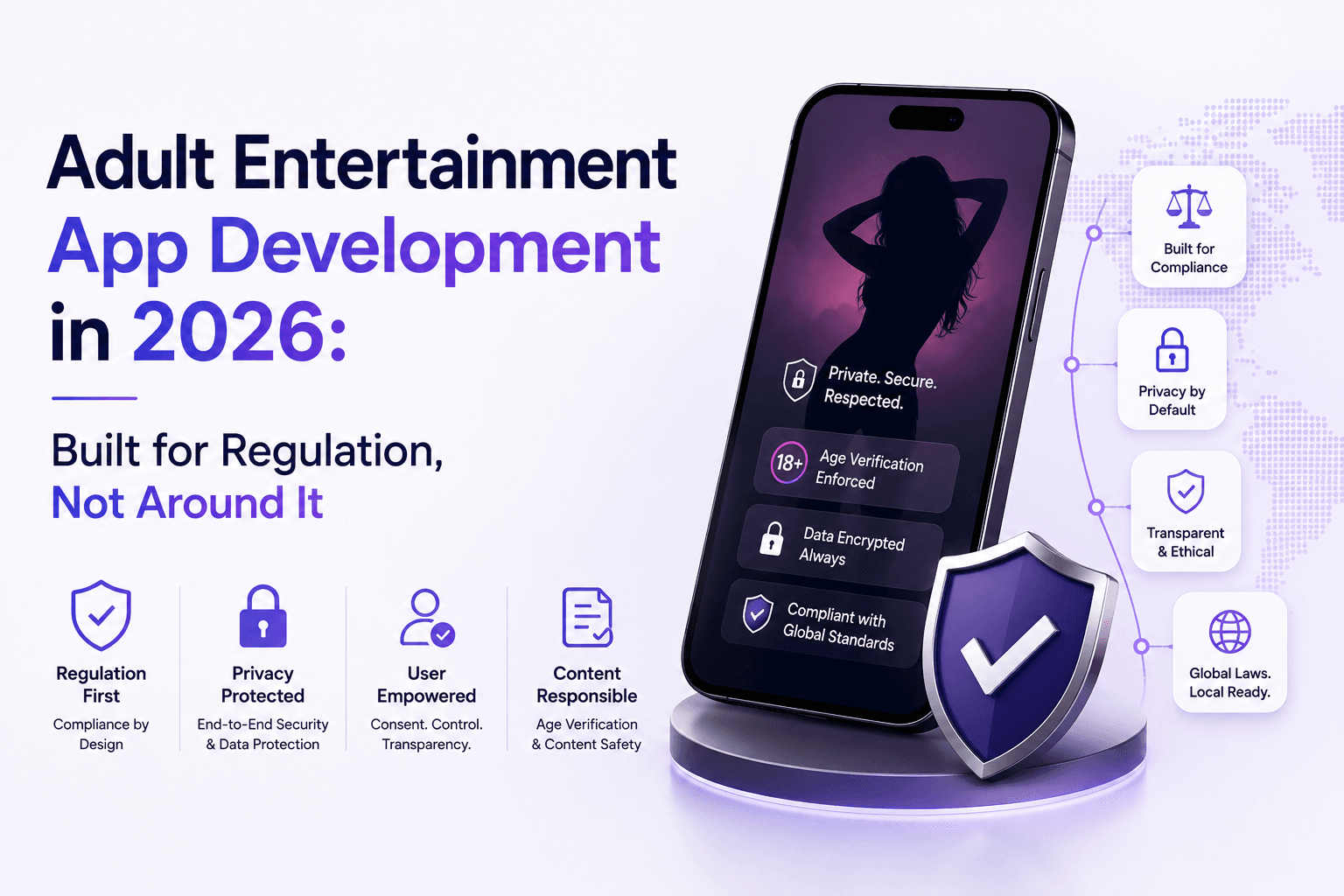
Key takeaways:
Market size estimates for AI companion apps range from roughly $2.6 billion (2024, narrow "AI girlfriend" definition) to nearly $50 billion (broader AI companion space), but every methodology agrees on 20%+ annual growth through the early 2030s.
Heavy daily use is linked to increased loneliness and withdrawal from real relationships, not decreased loneliness, according to APA-cited research, the opposite of what these apps are typically marketed to solve.
Mental Health Support is the single largest revenue segment (41.40% share), ahead of pure entertainment, meaning a wellness-adjacent product is scaling largely without clinical oversight.
Data privacy and fraud are documented risks, not hypotheticals, a Shanghai deepfake romance scam cost one victim nearly $28,000, and regulators (especially under the EU AI Act) are now targeting the exact features, persistent memory, emotional adaptation, that drive engagement.
AI companion apps have moved from internet curiosity to a genuine market category, valued anywhere from $2.8 to $3.1 billion (2024/2025 baseline) to as high as $49.5 billion depending on whether the estimate covers narrow "AI girlfriend" apps or the broader AI companion space, with most forecasts projecting continued 20%+ annual growth through the early 2030s. The growth is real. So are the open questions: independent psychological research links heavy daily use to increased loneliness rather than less, data privacy remains a documented weak point, and at least one country has already prosecuted a deepfake enabled romance scam built on the same technology.
AI companion apps are becoming one of the fastest-growing categories in the mobile technology space. These applications use conversational AI, generative AI, voice interaction, and personalization features to create more engaging digital experiences. With advancements in agentic AI engineering, enterprise AI product development, and AI deployment strategies, companies are building smarter, scalable solutions that combine autonomous workflows with personalized user interactions. From virtual companions to AI relationship apps, the industry is evolving rapidly with new trends shaping the future of mobile applications.
How Big Is This Market, Actually?
Market research firms don't agree on the exact number, and that disagreement is itself worth noting rather than papering over, it even shows up across different report editions from the same research firm.
| Source | Market Size | Forecast | CAGR |
|---|---|---|---|
| SNS Insider (2026 report) | $3.08 billion (2025) | $19.09 billion by 2035 | 20% |
| SNS Insider (November 2025 press release, earlier edition) | $2.57 billion (2024) | $11.06 billion by 2032 | 20% |
| SNS Insider, US market specifically | $0.73 billion (2024) | $2.98 billion by 2032 | 22.19% |
| TRG Data Centers / ArtSmart aggregation | $2.8 billion (2024) | $9.5 billion by 2028 | Not stated |
| Broader AI companion market estimates (cited in industry coverage) | ~$49.5 billion (current) | Growing | Varies by methodology |
Even the same research firm published two different market-size figures across report editions eight months apart, $2.57B to $11.06B in November 2025 versus $3.08B to $19.09B in the 2026 edition, which tells you more about how fast estimates get revised in this category than any single number does. The US specifically is forecast to grow slightly faster than the global average (22.19% vs. 20% CAGR), driven by the same factors cited for North America generally: mature tech infrastructure, high smartphone penetration, and above-average consumer comfort with AI-powered mobile applications.
The spread exists because "AI girlfriend app" and "AI companion" aren't always measured the same way, some estimates count only apps explicitly marketed around romantic/companion framing, others fold in the much larger general conversational AI apps and virtual assistant category. What's consistent across every estimate: the trajectory is up, and it's up steeply, not a rounding-error kind of growth.
Funding backs up the demand signal too: worldwide investment in AI companion startups reportedly jumped from $7 million in 2021 to $299 million in 2022, a more than 40x increase in a single year, according to data cited via Independent UK.
Where the Growth Is Concentrated
| Segment | Leading Share | Fastest Growing |
|---|---|---|
| Platform | Android (32.33% share, 2025) | Web-based (23.97% CAGR) |
| Subscription model | Subscription-based (25.38% share) | Freemium (24.07% CAGR) |
| Application/use case | Mental Health Support (41.40% share) | Entertainment (24.38% CAGR) |
| Region | North America (40.07% share, 2025) | Asia-Pacific (24.05% CAGR) |
Source: SNS Insider's 2026 market report. The Mental Health Support category leading by revenue share is notable, it means the largest share of this market isn't being marketed purely as entertainment or romance, it's positioned around emotional wellness and loneliness relief specifically, which raises the ethical stakes discussed further down.
Search Trends and Demographics: Who's Actually Using This
Search interest data (aggregated by ArtSmart.ai from TRG Data Centers, Skimai, and Independent UK reporting) shows this went from fringe curiosity to mainstream search behavior fast:
- Google searches for "AI girlfriend" grew by roughly 2,400% between 2022 and 2024.
- "Virtual girlfriend" searches rose about 620% year-over-year globally.
- The term "AI companion" saw a 490% rise in the US between 2022 and 2024.
- The US leads global search volume by a wide margin, followed by India, then the UK.
Who's searching, and using:
- Average user age is around 27.
- Roughly 28% of men aged 18 to 34 report having tried an AI girlfriend app at least once.
- About 18% of users are women, meaning this is not an exclusively male category, though it skews heavily male.
- One in five men on dating apps report having tried an AI companion platform.
- 55% of users interact with their personalized AI experiences daily, and separate research cited via SNS Insider puts daily engagement even higher, at 67%.
- Average premium spend runs around $47/month per active paying user.
The demographic pattern (young, disproportionately single men) lines up with a related data point: 63% of men under 30 report being single, compared to 34% of women under 30, according to the same research aggregation. That gap is one plausible explanation for why adoption skews the way it does, though correlation here isn't the same as a proven causal story.
Top AI Companion Apps and Platforms Driving the Market
The category spans a real range, from established, mental-health-adjacent apps to entertainment-first platforms to hardware ventures at the extreme end.
| Platform Type | Examples | Notable Detail |
|---|---|---|
| Long-running, memory-focused companions | Replika (40M+ users globally) | Built its brand specifically around persistent memory and long-term "growth" with the user, not just conversation |
| Multimodal, customization-heavy apps | Candy AI, Soulful AI Mate | Support chat, voice, image, and video generation in one app; heavy personality/appearance customization |
| Conversation-quality specialists | Kupid AI | Independent reviews consistently rank its conversational naturalness above less-funded competitors |
| Mass-market, high-install apps | Soulful AI Mate (10M+ installs), Anima (1M+ downloads, Google Play) | Show this category has real mainstream reach beyond a niche early-adopter audience |
| Hardware/robotics ventures | Realbotix | Unveiled a $175,000 life-size AI robot companion ("Aria") at CES in January 2025, an extreme end of the market, not representative of the typical user's spend |
| Decentralized/creator platforms | MyShell | Raised $11 million in March 2024 to build a blockchain-based platform for AI companion creation with creator royalties, reportedly supporting 1M+ users |
Worth being direct about: this article is describing what these platforms are and how the market is structured, not recommending or ranking them for use. Several apps in this category include explicit or NSFW content generation as a core feature, which sits outside the scope of a market-analysis piece and carries its own separate set of platform-policy and legal considerations depending on jurisdiction.
Key AI Companion App Trends in 2026
- Advanced conversational AI with more human-like interactions
- Voice-enabled AI companions for real-time conversations
- AI avatars with image and video generation capabilities
- Personalized AI experiences using memory and user preferences
- Integration of generative AI models into mobile applications
- Stronger privacy and security features due to sensitive user data
- Cross-platform AI companions across mobile, web, and wearable devices
AI companion apps are evolving far beyond simple chatbot experiences. Advances in large language models, multimodal AI, and on-device processing are making these platforms more personalized, emotionally aware, and capable of supporting long-term interactions. The following trends are expected to shape the next generation of AI companion apps through 2026 and beyond.
Advanced Conversational AI
Modern AI companion apps are powered by increasingly capable large language models that deliver more natural, context-aware conversations. Instead of scripted responses, users expect AI companions to remember previous interactions, understand emotions, and maintain consistent personalities across long-term conversations.
Voice-First Experiences
Voice interaction is becoming a major differentiator in AI companion apps. Real-time speech recognition, expressive AI voices, and lower response latency create conversations that feel more natural than text alone. As voice models improve, hands-free AI companionship is expected to become a standard feature.
Personalized AI Memory
Long-term memory is transforming user engagement. AI companion apps can remember preferences, interests, important dates, and previous conversations to create more personalized experiences. This persistent memory helps users build stronger emotional connections while also increasing the importance of responsible data management and privacy.
AI Avatars and Multimodal Interaction
Many platforms now combine conversational AI with AI-generated images, avatars, video, and voice to create richer digital companions. Multimodal AI allows users to interact through text, speech, and visual content within the same application, making experiences more immersive.
Privacy-First AI Development
As AI companion apps collect increasingly sensitive personal information, privacy is becoming a competitive advantage. Developers are investing in stronger encryption, transparent data policies, user-controlled memory settings, and compliance with regulations such as GDPR, CCPA, and the EU AI Act to build trust.
Cross-Platform AI Companions
Users increasingly expect their AI companion to remain available across smartphones, tablets, web browsers, wearables, and smart devices. Cross-platform synchronization ensures conversations, preferences, and memories remain consistent regardless of where users access the application.
The Ethical and Psychological Questions
This is the part market-sizing reports tend to skip, and it's the part that actually matters most for anyone evaluating this trend seriously, especially as AI companion apps expand across areas like adult entertainment, digital relationships, emotional support, and personalized AI experiences.
The Research Says: Supplement, Not Replacement, With Real Risk at the Edges
A relationship coach's analysis of the trend (davidwygant.com, July 2026) lands on a specific, research-backed verdict: AI companions are becoming a permanent supplement to modern dating, not a replacement for it, but the risk is concentrated in a smaller group who lean on them instead of pursuing human connection. Citing American Psychological Association research, the piece notes that heavy daily use of AI companions is linked to increased loneliness and withdrawal from real-world relationships, not decreased loneliness, the opposite of what the apps are often marketed to solve. Because these companions are designed to always validate and never genuinely push back, they can also quietly reshape what users expect from real human partners.
This is a meaningfully different framing than either "harmless fun" or "replacing dating entirely", the honest middle ground is that these apps genuinely help some people in a lonely moment, while also carrying a documented risk of deepening isolation for users who substitute them for the harder work of real connection.
Data Privacy Is a Documented Weak Point, Not a Hypothetical
Market analysts flag privacy and data security as one of the biggest headwinds to continued growth, and for good reason: these apps require deeply personal information (preferences, emotional disclosures, sometimes photos or voice data) to deliver the personalization that makes them compelling, which is exactly the kind of data users are most wary of exposing. Regulatory frameworks like GDPR and CCPA add real compliance complexity for developers in this space, and recent data-handling controversies have raised user awareness of the risk.
Fraud Is a Real, Documented Consequence, Not a Slippery-Slope Argument
In February 2025, a man in Shanghai was reportedly scammed out of nearly $28,000 by a deepfake-generated "AI girlfriend" persona, according to SNS Insider's market report. This is the sharpest illustration of a broader risk category: the same generative technology that makes these apps compelling also enables romance-scam fraud when deployed with bad intent rather than a legitimate platform's guardrails.
Regulatory Pressure Is Building, Especially in Europe
The EU AI Act is the most frequently cited regulatory pressure point for this category. Platforms operating in Europe have to balance the exact features that make these apps engaging, persistent memory, emotional adaptation, proactive outreach, against tightening requirements around data retention, algorithmic transparency, and content policy. That tension isn't unique to any one region; every serious platform in this space eventually runs into the same underlying question: how much emotional realism is the actual product, and how much of that needs a guardrail.
Frequently Asked Questions
How big is the AI girlfriend app market, really?
Estimates vary meaningfully by methodology. Narrower market research (SNS Insider) puts it at $3.08 billion in 2025, projected to reach $19.09 billion by 2035. Other aggregated estimates put 2024 value at $2.8 billion, reaching $9.5 billion by 2028. Broader definitions that include the wider AI companion space put current market size significantly higher. Treat any single figure as directional rather than definitive.
Are AI girlfriend apps actually replacing human dating?
No, according to both market data and psychological research. Most users treat these apps as a supplement, entertainment, curiosity, or comfort during a lonely stretch, rather than a full substitute for human relationships. The concerning pattern shows up in a smaller subset of heavy daily users, where research links continued use to increased loneliness and relationship withdrawal, not less.
Who is the typical AI girlfriend app user?
Around 27 years old on average, disproportionately male (roughly 28% of men aged 18 to 34 have tried one, versus about 18% of the overall user base being women), and often already active on dating apps rather than avoiding them entirely, one in five men on dating apps report having also tried an AI companion platform.
What's the biggest ethical concern with this category?
Two stand out with real evidence behind them: data privacy (these apps require unusually personal disclosure to function, and regulatory scrutiny is increasing accordingly) and the documented psychological risk that heavy daily use correlates with increased loneliness and withdrawal from real relationships, the opposite of the stated benefit.
Can AI companion apps actually help with loneliness?
In the short term, potentially yes, users report real comfort and a feeling of being heard during difficult moments. But the research is clear that this doesn't extend to heavy, sustained daily reliance, which correlates with worse outcomes over time. For persistent loneliness, mental health professionals and real human support remain the better-evidenced path.
Is this market regulated?
Increasingly, yes, particularly in Europe. The EU AI Act is pushing platforms to reconcile the personalization features that drive engagement with new requirements around data retention, transparency, and content policy. Data protection frameworks like GDPR and CCPA already apply given how much personal data these apps collect.
What's driving the recent growth specifically?
Two forces arriving at the same time: the underlying AI technology (conversation quality, voice, image generation) improved dramatically, and reported loneliness and dating-app fatigue rose at the same time. The apps didn't create the demand, they met demand that was already there.
Are these apps mostly used for romantic/sexual content, or something broader?
Broader than the "AI girlfriend" label suggests. The largest revenue segment by application is Mental Health Support (41.40% share), ahead of pure entertainment, indicating a meaningful share of usage is framed around emotional wellness and companionship rather than romantic or sexual content specifically, even though that framing exists prominently within the category too.
What Comes Next
Three things are worth watching heading into 2027 rather than any single feature release:
- Regulatory clarity, or the lack of it. How the EU AI Act's requirements actually get enforced against companion-specific features (persistent memory, emotional adaptation) will likely set a template other regions follow or diverge from.
- Whether mental-health framing gets formalized or challenged. Given Mental Health Support is already the largest application segment by revenue, expect either genuine clinical partnerships (as some analysts anticipate) or regulatory pushback questioning whether an engagement-optimized product should be positioned as a wellness tool without clinical oversight.
- How deeply this embeds into ordinary routine, not how convincing any single app becomes. The more interesting trend line isn't which platform wins on realism, it's whether daily use normalizes further among younger demographics already showing the highest adoption, and what that means for the loneliness research findings noted above.
The Future of AI App Development
The growth of AI companion apps is also creating new opportunities for mobile app developers. Building successful AI-powered applications requires advanced conversational AI, secure data handling, scalable cloud infrastructure, natural language processing, and privacy-focused architecture to deliver reliable user experiences.
Conclusion
AI companion apps have evolved from experimental chatbots into a growing segment of the mobile app industry, driven by advances in generative AI, conversational technology, and personalized digital experiences. The data supports a nuanced picture: genuine short-term comfort for many users, a real and growing business with legitimate mental-health-adjacent positioning, and simultaneously, documented risks around data privacy, fraud, and a research-backed link between heavy use and increased loneliness rather than less. Treating this as either a harmless novelty or an existential threat to human connection both miss what the actual evidence shows: a technology that's becoming a permanent fixture in the relationship landscape, filling a real gap, while carrying real risks that neither the market-growth headlines nor the app marketing copy tend to lead with.