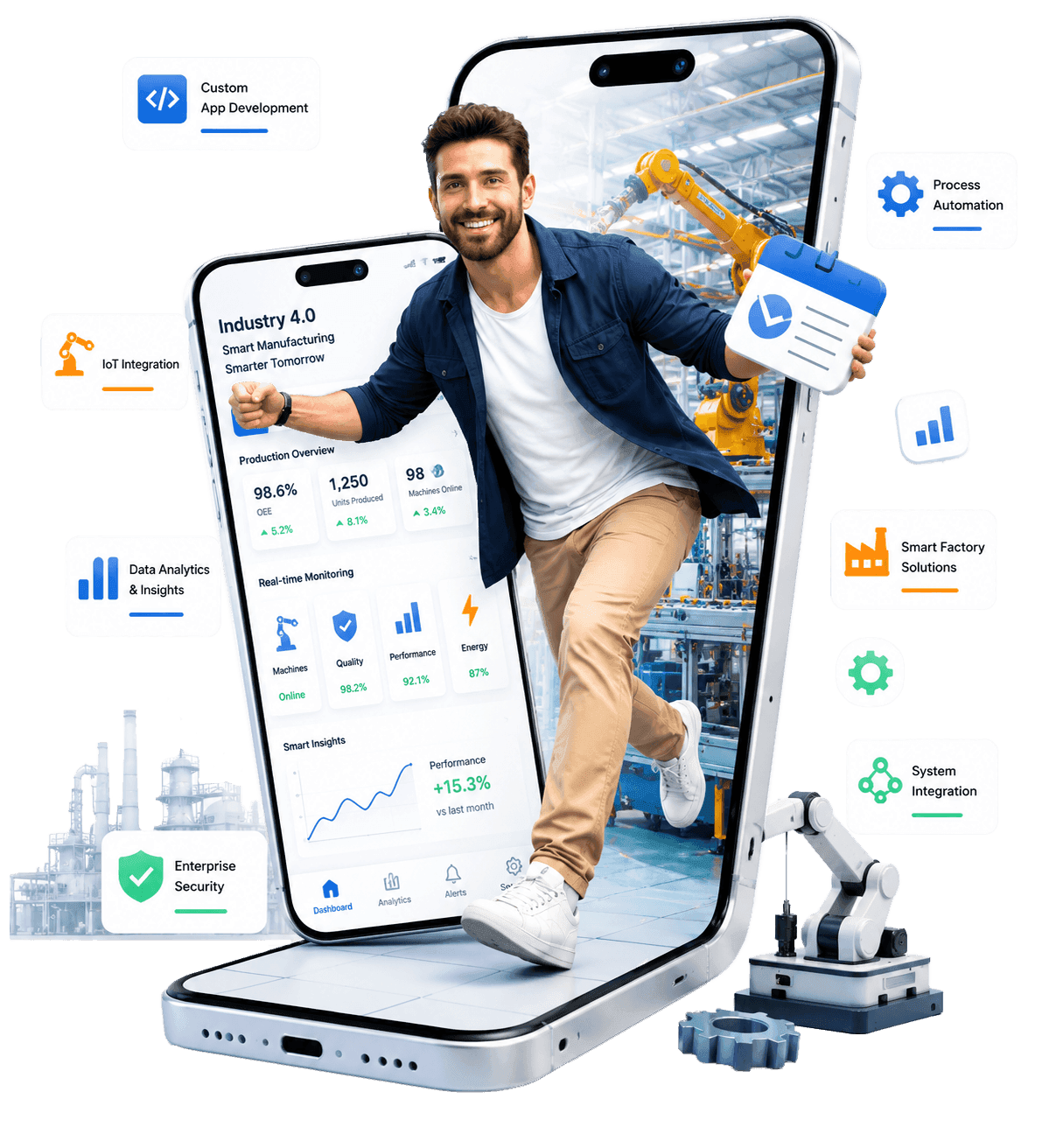
Junkies Coder engineers enterprise-grade software for the manufacturing sector, covering Industrial IoT (IIoT), supply chain automation, predictive maintenance, and digital twin architecture under a single technical engagement model.

Scroll
Our manufacturing app development practice spans the full industrial lifecycle, from smart factory dashboards and MES platforms to AI-driven predictive maintenance and global supply chain visibility, tailored to your operational scale.

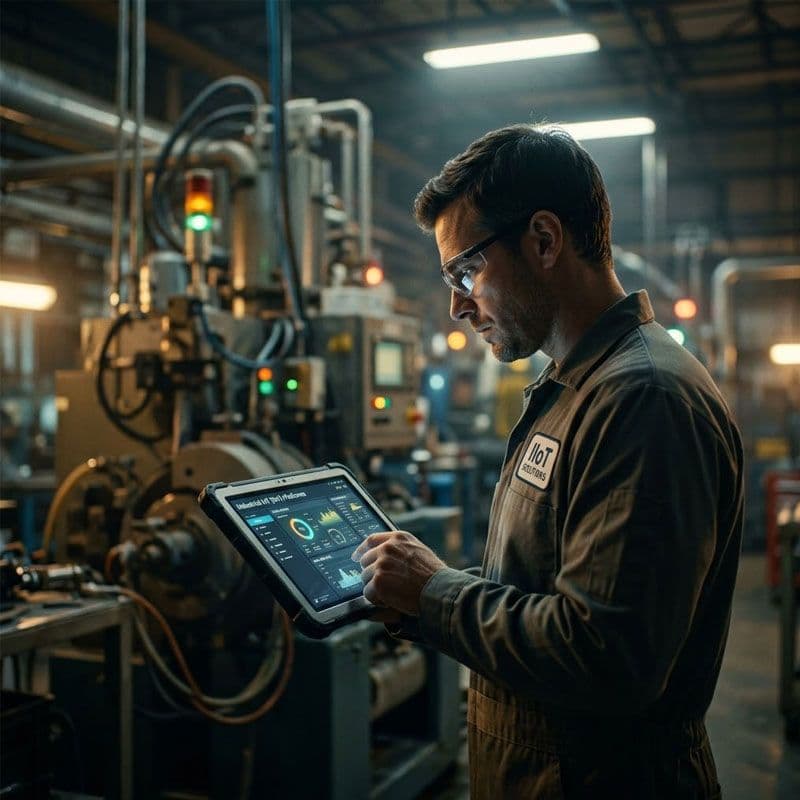
We build highly scalable IIoT architectures that aggregate real-time sensor data, providing centralized machine telemetry, remote asset monitoring, and edge-computing capabilities for modern factory floors.

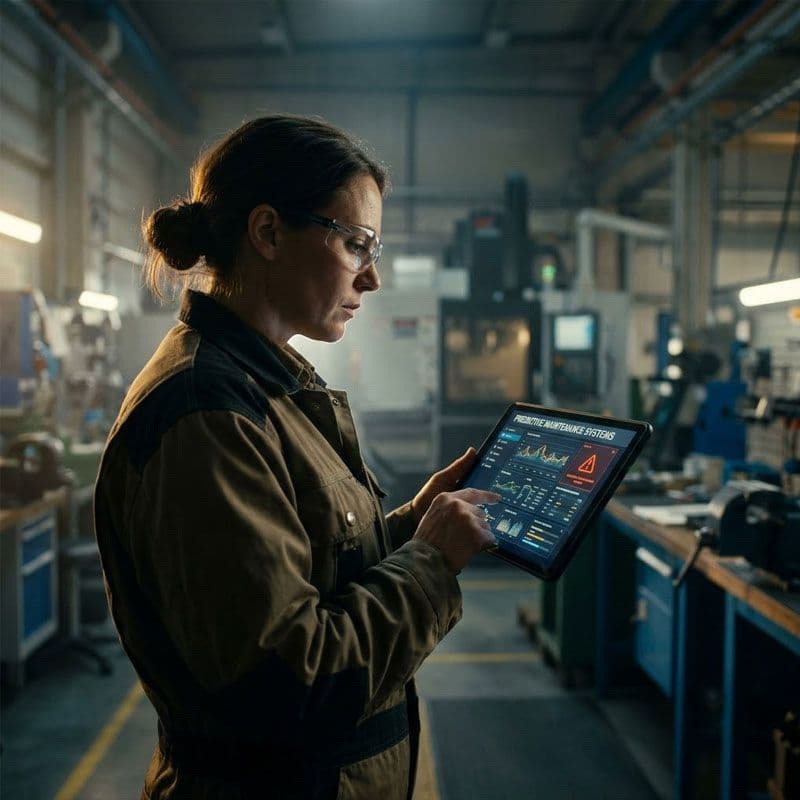
We engineer AI-driven maintenance applications that analyze acoustic, vibration, and temperature data to predict equipment failures before they occur, shifting strategies from reactive to proactive.

We develop API-first logistics platforms offering end-to-end global visibility, real-time fleet GPS tracking, automated inventory turnover algorithms, and seamless multi-vendor ERP integration.

We architect virtual replicas of physical production lines and supply chains, enabling factory managers to run simulated stress tests, optimize workflows, and predict output bottlenecks without disrupting live operations.

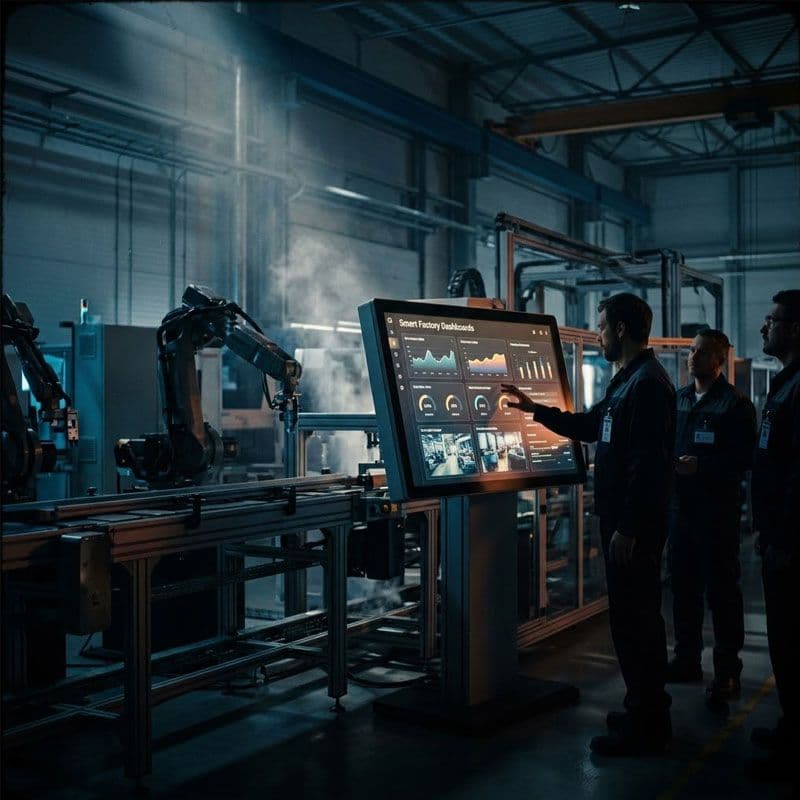
We design intuitive, central command interfaces that aggregate siloed data from PLCs and manual logs into a single pane of glass, providing real-time Overall Equipment Effectiveness (OEE) and KPI tracking.

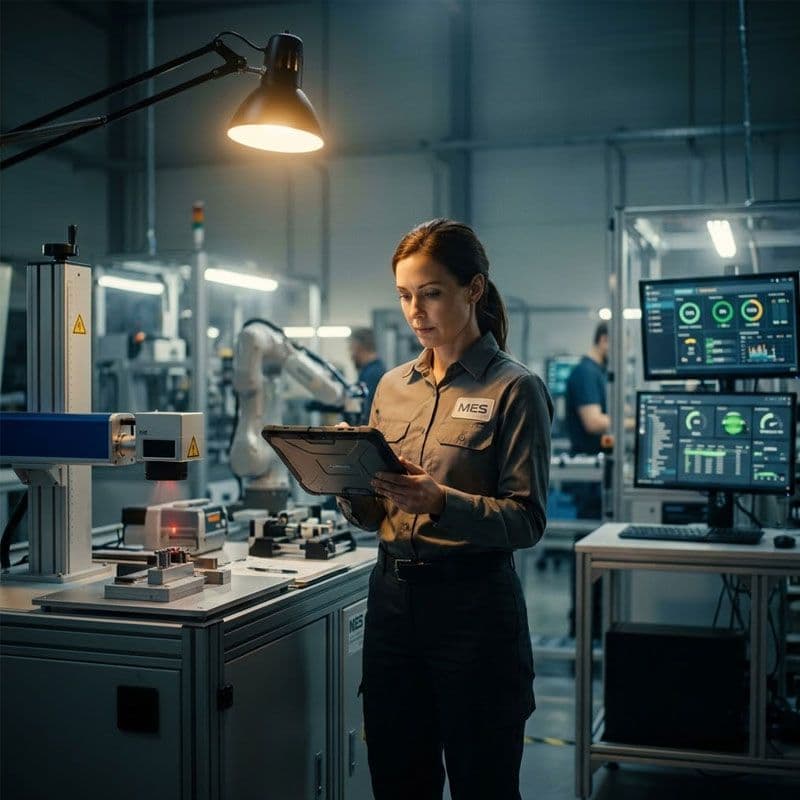
We build custom MES platforms that digitize the entire production lifecycle, replacing paper-based tracking with automated shop floor routing, recipe management, and real-time labor tracking.

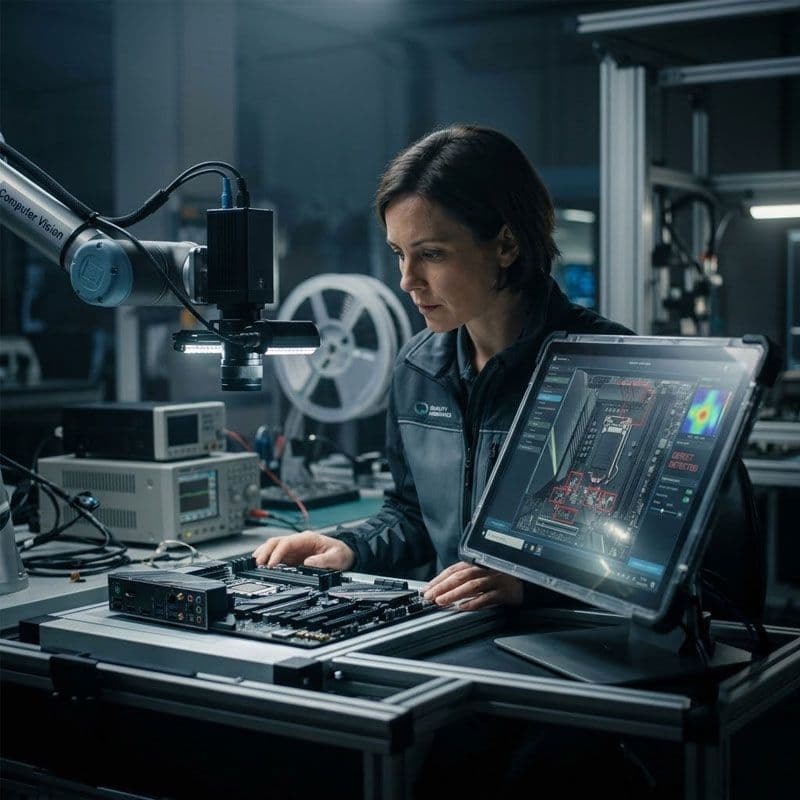
We develop automated defect detection systems using industrial cameras and deep learning models (like OpenCV and PyTorch) to instantly identify assembly errors and ensure zero-defect manufacturing yields.

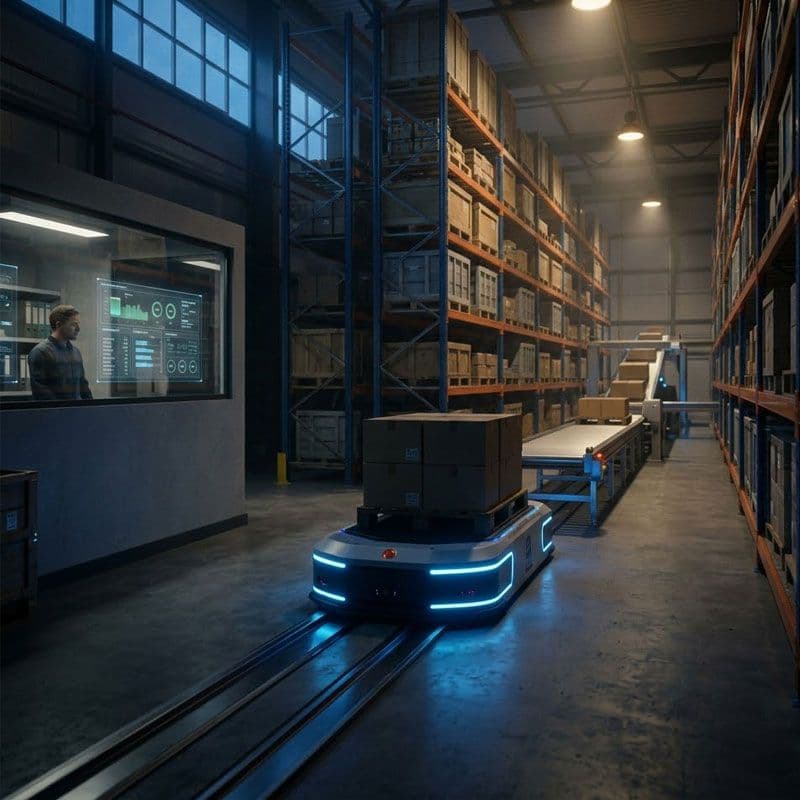
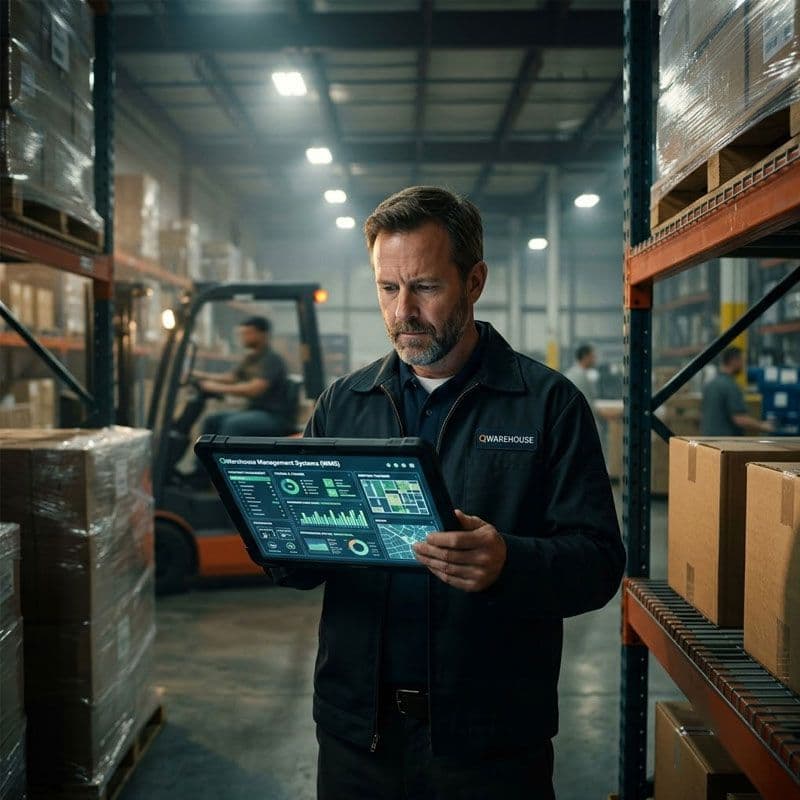
We engineer highly responsive warehouse applications supporting automated storage and retrieval systems (AS/RS), ruggedized barcode/RFID scanning, and optimized put-away routing for massive distribution centers.
Junkies Coder delivers manufacturing app development across key industrial sectors, including automotive, aerospace, consumer goods, heavy machinery, and pharmaceutical production.
01
We build highly scalable IIoT architectures that aggregate real-time sensor data, providing centralized machine telemetry, remote asset monitoring, and edge-computing capabilities for modern factory floors.
02
We engineer AI-driven maintenance applications that analyze acoustic, vibration, and temperature data to predict equipment failures before they occur, shifting strategies from reactive to proactive.
03
We develop API-first logistics platforms offering end-to-end global visibility, real-time fleet GPS tracking, automated inventory turnover algorithms, and seamless multi-vendor ERP integration.
04
We architect virtual replicas of physical production lines and supply chains, enabling factory managers to run simulated stress tests, optimize workflows, and predict output bottlenecks without disrupting live operations.
05
We design intuitive, central command interfaces that aggregate siloed data from PLCs and manual logs into a single pane of glass, providing real-time Overall Equipment Effectiveness (OEE) and KPI tracking.
06
We build custom MES platforms that digitize the entire production lifecycle, replacing paper-based tracking with automated shop floor routing, recipe management, and real-time labor tracking.
07
We develop automated defect detection systems using industrial cameras and deep learning models (like OpenCV and PyTorch) to instantly identify assembly errors and ensure zero-defect manufacturing yields.
08
We engineer highly responsive warehouse applications supporting automated storage and retrieval systems (AS/RS), ruggedized barcode/RFID scanning, and optimized put-away routing for massive distribution centers.
Manufacturing app development demands robust edge computing alongside deep operational awareness. Junkies Coder brings both to every engagement, building industrial applications that are scalable, secure, and architecturally equipped for 24/7 production floors.
We securely connect legacy programmable logic controllers (PLCs) and SCADA systems to modern cloud infrastructure using industrial protocols like OPC UA and Modbus TCP, unlocking stranded machine data without ripping out existing hardware.
Our IIoT platforms are architected with edge processing nodes that filter, analyze, and act on high-frequency sensor data locally, guaranteeing continuous factory operations and safety protocols even during cloud connectivity outages.
We build high-throughput data ingestion pipelines using MQTT and specialized time-series databases to capture, index, and visualize millions of machine telemetry events with sub-second latency across global facilities.
Our manufacturing app development engagements deliver outcomes that directly impact Overall Equipment Effectiveness (OEE), production yield, predictive downtime reduction, and long-term operational efficiency across industrial enterprises.
Discuss Your Manufacturing Project01
By integrating predictive maintenance algorithms and real-time machine telemetry, our platforms identify anomaly patterns before failures occur, drastically reducing unplanned downtime and maintaining continuous production schedules.
02
AI-driven quality control and computer vision defect detection systems ensure defective units are caught instantly on the assembly line, minimizing material waste and maximizing overall operational yield.
03
API-first logistics architecture provides unified, real-time visibility across global suppliers, warehouses, and transit fleets, allowing your enterprise to preempt bottlenecks and optimize inventory turnover.
04
We secure sensitive intellectual property and edge hardware networks with AES-256 encryption, zero-trust network segmentation, and stringent access controls to prevent cyber-physical threats.
05
Smart factory dashboards aggregate siloed data from ERPs, PLCs, and manual logs into a single pane of glass, empowering floor managers and executives with actionable OEE (Overall Equipment Effectiveness) metrics.
06
Our cloud-native microservices and modular IIoT architectures ensure your manufacturing platform can scale from a single pilot facility to a global network of interconnected smart factories without systemic redesigns.
Our industrial engineering practice embeds IoT connectivity, real-time analytics, and operational security into every platform we deliver.

Our industrial engineering team chooses technology based on real factory demands, ensuring low-latency telemetry, resilient offline capabilities, and zero downtime across global supply chains.
An operations-first, sprint-based delivery process from shop floor scoping to live deployment, purpose-built for smart factories, logistics hubs, and enterprise industrial products.
We map your shop floor operations, legacy PLC infrastructure, and global supply chain dependencies before a single line of architecture is written to ensure the product integrates seamlessly into your industrial environment.
We translate your manufacturing model into a detailed blueprint covering machine-to-machine (M2M) communication, user workflows, edge processing logic, and third-party hardware dependency mapping.
Platform infrastructure is engineered with scalable data lakes, MQTT message brokers, resilient edge computing integrations, and zero-trust access control designed to handle millions of daily telemetry events.
Ruggedized tablet interfaces, central command dashboards, and intuitive operator onboarding flows are crafted to reduce training time and eliminate friction for shop floor personnel.
Sprint-based development of digital twins, inventory tracking engines, real-time alert systems, and bi-directional SCADA/ERP integrations via certified industrial protocols like OPC UA.
Machine learning models for predictive equipment failure, computer vision defect detection, and automated yield optimization are embedded into the platform core to maximize production efficiency.
Rigorous hardware-in-the-loop stress testing, edge node offline capability assessments, and pre-launch security reviews ensuring your platform performs flawlessly under harsh factory conditions.
Post-launch cloud infrastructure management, real-time sensor monitoring, over-the-air (OTA) firmware updates, and continuous KPI tracking keeping your manufacturing platform operationally sound 24/7.
Shalehin Modasia
Marketing DirectorExplore manufacturing app development projects delivered by Junkies Coder, from high-throughput IIoT sensor dashboards and digital twins to AI-driven defect detection ecosystems.

Industry
Manufacturing
Platform
Corporate Website & E-Commerce
Location
Dammam, Saudi Arabia
Outcomes
Unified Digital Platform
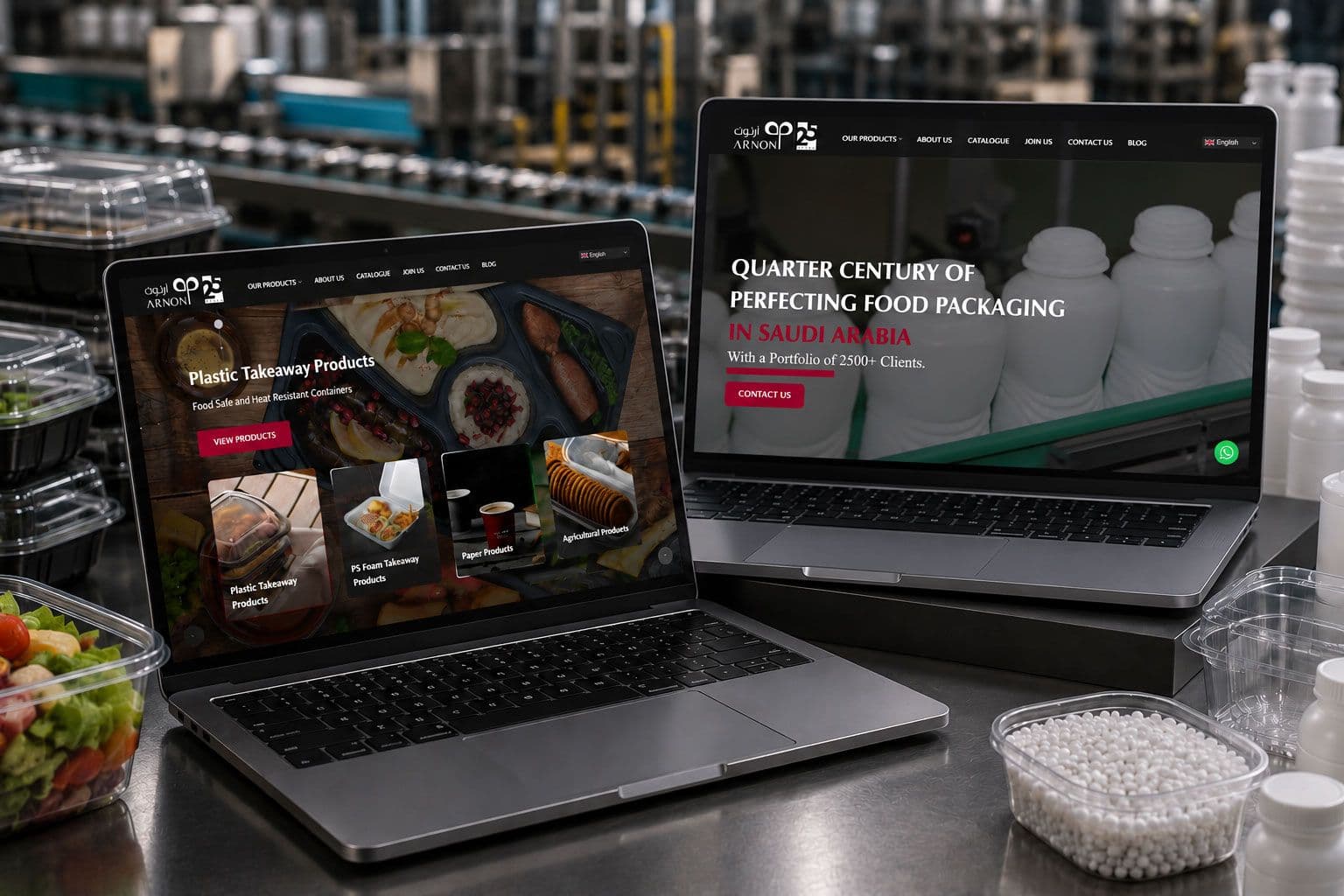
Arnon Plastic Industries needed a modern digital presence to match its scale as a 25-year manufacturing leader, and Junkies Coder delivered a corporate website with an integrated product catalogue, dual service-line navigation, and a dedicated e-commerce store, giving Arnon a unified platform across its food packaging and building insulation divisions.
Whether you're looking to develop a digital solution from scratch, scale your current offerings, or fully modernize your system, we are here to help.

Junkies Coder develops Industrial IoT (IIoT) platforms, predictive maintenance systems, Manufacturing Execution Systems (MES), Supply Chain and logistics tracking apps, smart factory dashboards, digital twin architectures, and automated warehouse management systems (WMS). Every solution is custom-engineered to match the operational scale and hardware infrastructure of the client.
We architect IIoT applications using edge computing gateways and scalable cloud infrastructure (AWS IoT Core, Azure IoT Hub) that utilize lightweight messaging protocols like MQTT. This ensures high-throughput machine telemetry is processed with sub-second latency, and edge nodes can continue operating and caching data even during temporary network outages on the factory floor.
Yes. Our industrial engineering practice includes integrations with legacy Programmable Logic Controllers (PLCs), SCADA systems, and modern Enterprise Resource Planning (ERP) software like SAP and Oracle. We utilize industrial protocols such as OPC UA and Modbus TCP to securely bridge the gap between operational technology (OT) and IT infrastructure.
We deploy machine learning models for predictive equipment failure (using vibration, temperature, and acoustic sensor data), computer vision models for automated assembly line defect detection, and AI-driven supply chain routing algorithms. These capabilities optimize yield, reduce waste, and shift maintenance strategies from reactive to proactive.
A focused single-facility dashboard or inventory app typically requires 12 to 16 weeks. Mid-complexity IIoT platforms with machine integrations and real-time alerts generally need 20 to 28 weeks. Enterprise-scale smart factory ecosystems spanning digital twins, AI predictive maintenance, and multi-site global ERP integrations typically require 32 to 48 weeks following extensive operational scoping.
Yes. We engineer ruggedized tablet applications, hands-free wearable interfaces (like AR glasses for remote assistance), and mobile apps specifically designed for operators wearing personal protective equipment (PPE). We prioritize high contrast, large touch targets, and offline-first capabilities for harsh industrial environments.
We apply defense-in-depth security to protect critical infrastructure. This includes AES-256 encryption for data at rest, TLS 1.3 for transit, secure over-the-air (OTA) firmware update mechanisms for edge devices, zero-trust network segmentation to isolate IT from OT networks, and stringent role-based access controls for machine commands.
A focused single-facility application typically requires USD 25,000 to 50,000. Mid-complexity IIoT and logistics platforms with custom hardware integrations range from USD 60,000 to 120,000. Comprehensive enterprise Industry 4.0 ecosystems covering global digital twins, AI defect detection, and deep ERP integrations start at USD 130,000 and above. A detailed proposal is provided after architecture scoping.
We engineer Digital Twins by creating a virtual, real-time replica of your physical assets, production lines, or entire supply chains. By continuously feeding the twin with live sensor data, factory managers can run simulated stress tests, optimize production workflows, and predict the impact of operational changes without disrupting actual physical output.
Our industrial support practice covers 24/7 cloud infrastructure monitoring, rapid incident response for critical production blockers, scheduled edge device OTA firmware updates, OS compatibility maintenance for ruggedized devices, and continuous retraining of AI predictive maintenance models to ensure accuracy as factory conditions evolve.