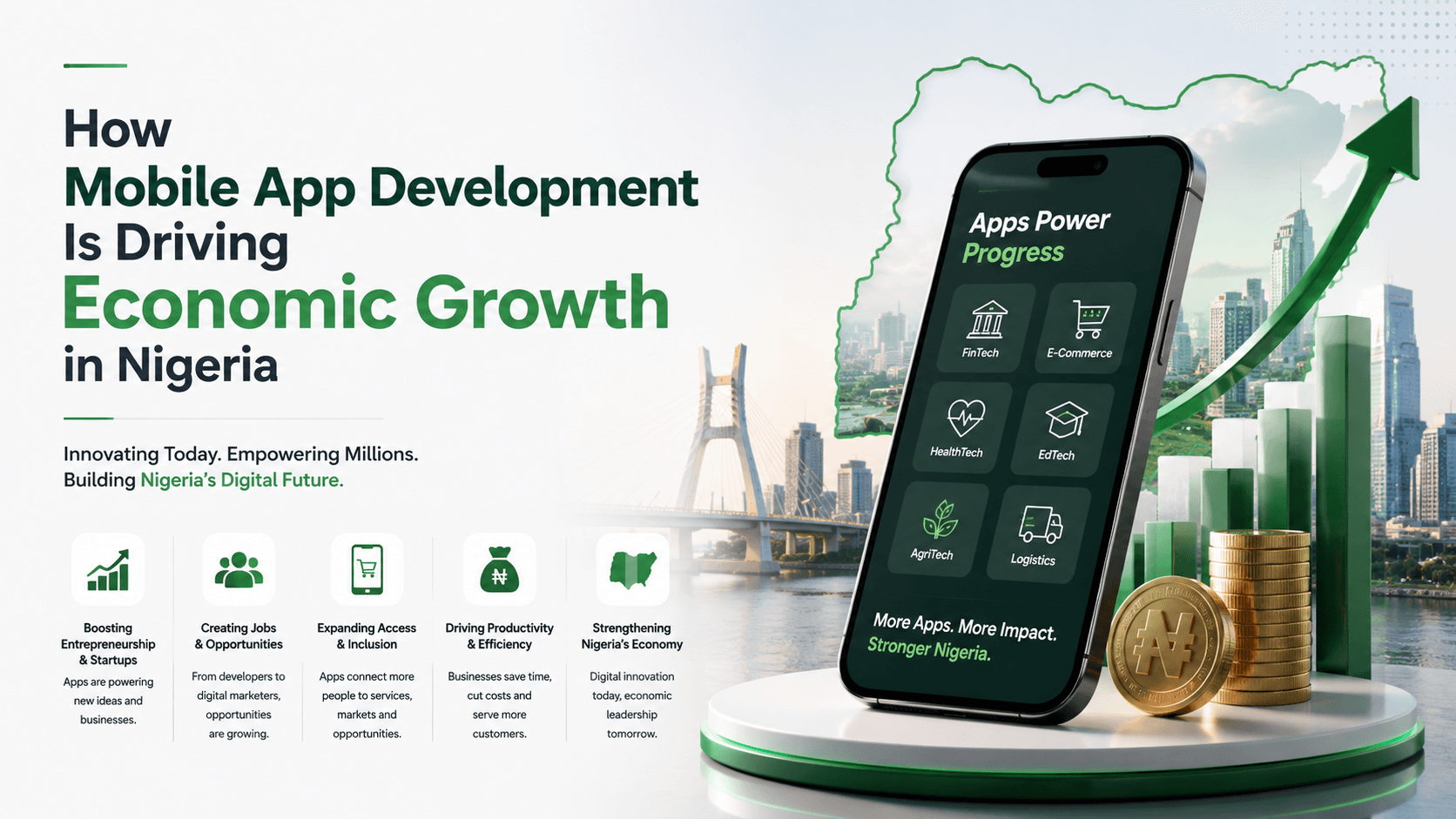
What happens when a city with traffic congestion, payment challenges, and infrastructure limitations becomes the center of mobile innovation? Lagos provides the answer. The city has transformed everyday challenges into opportunities for fintech, logistics, healthcare, and digital service applications.
Lagos did not become Nigeria's strongest market for mobile app development by having a frictionless environment. Instead, it established itself as the country’s leading commercial capital and tech powerhouse precisely because developers had to build robust solutions to overcome local obstacles. Today, Lagos hosts a significant share of Nigeria's startup ecosystem, making it the country's primary hub for technology companies and digital innovation. The city captured global recognition when it was named a rising star and rapidly growing emerging tech ecosystem in Dealroom's Global Tech Ecosystem Index. This combination of venture capital, digital infrastructure, and a growing smartphone user base has positioned Lagos as one of Africa's leading centers for mobile engineering and innovation.
The Lagos Ecosystem at a Glance
Before diving deeply into the historical progression and technical frameworks of this market, it helps to understand the baseline factors driving this explosive growth.
| Factor | Lagos Advantage |
|---|---|
| Startup Density | Nigeria's largest startup ecosystem |
| Fintech Growth | Strong payment and banking innovation |
| Talent Pool | Large developer and founder community |
| Market Size | Millions of mobile first users |
| Infrastructure Challenges | Drives practical app solutions |
Transforming Infrastructure Friction into Software Solutions
The narrative of software development in Lagos is entirely tied to solving friction. While developers in Western markets might focus on optimizing delivery times from two days to two hours, developers in Lagos historically faced systemic challenges involving fragmented banking systems, massive unbanked populations, and complex urban gridlocks.
The Fintech Revolution
Financial technology applications were the earliest and most aggressive adopters of advanced mobile engineering in Lagos. Before the mobile boom, traditional banking infrastructure struggled to serve the vast population efficiently. Long queues and failed interbank transfers were daily realities. Mobile applications bypassed the physical branch infrastructure entirely. By utilizing USSD fallback structures and highly optimized Android applications, fintech pioneers built systems that allowed instant peer to peer transfers and bill payments. This environment forced developers to master high availability architectures and real time transactional processing, setting a high standard for software engineering across the city.
Mobility and Logistics
Urban mobility in Lagos presents a unique set of constraints, primarily defined by heavy traffic congestion and fragmented address systems. To solve this, local startups deployed on demand logistics and ride hailing applications heavily reliant on GPS tracking, dynamic routing algorithms, and offline mapping capabilities. The necessity to track motorcycles and delivery vans through unpredictable traffic required mobile applications with highly resilient data fetching capabilities, ensuring location updates remained accurate even when passing through intermittent network zones.
The High Density of Tech Innovators
Lagos serves as the birthplace and operational hub for Africa's most prominent technology giants. Known colloquially as the "Silicon Lagoon", the city is home to several of Africa's most successful technology companies, including Interswitch, Flutterwave, OPay, and Moniepoint.
These companies did not achieve their massive valuations by merely cloning Western applications; they succeeded by engineering mobile first strategies that explicitly catered to African realities. For example, OPay scaled rapidly by embedding agency banking into a seamless mobile application, creating a digital financial footprint for millions of informal merchants. Flutterwave provided the essential API connective tissue that allowed other mobile applications to process payments reliably across borders.
Because these giants are headquartered in Lagos, they continuously inject capital, technical standards, and highly trained alumni back into the local ecosystem. Startups based here have raised billions in venture funding, allowing them to aggressively hire premium local engineering talent. This demand is heavily distributed across booming sectors including electronic commerce, transport, and agricultural technology, creating a constant cycle of mobile application innovation.
A Massive Mobile First Consumer Base
The demographic profile of Lagos provides an immediate and highly lucrative testing ground for application developers. Nigeria boasts a rapidly growing base of active smartphone users, with Lagos holding the highest density of internet connectivity and device adoption in the nation.
Unlike older markets that transitioned slowly from desktop computers to laptops and then to mobile phones, a vast majority of internet users in Lagos bypassed the desktop phase entirely. This "leapfrog" effect means consumer expectations are fundamentally tied to the mobile interface. Consumers in Lagos spend significant time daily on mobile applications. This hyper engaged audience turns custom mobile apps into the primary channel for business revenue, vastly outperforming traditional web or physical storefront options.
Furthermore, the consumer base is exceptionally young and digitally fluent. They demand applications that are not only highly functional but also deeply intuitive. If a digital service lacks a native mobile presence, it functionally does not exist for a large segment of the Lagos consumer market.
Advanced Digital Infrastructure
Lagos has developed one of the strongest digital infrastructure networks in West Africa. The South West zone anchors over 20 operational data facilities, attracting global tech titans like Equinix and Google. These data centers drastically reduce latency for locally hosted mobile backends, ensuring that applications feel snappy and responsive even during peak usage hours.
Additionally, the high speed internet infrastructure stretching across the Lagos Ibadan corridor provides the real time settlement rails needed to power complex mobile applications. Heavy investments in submarine cables landing directly on the shores of Lagos ensure massive bandwidth availability. While localized power and last mile connectivity still present hurdles, the foundational backbone processing the data for these millions of mobile applications rivals many global tech hubs.
Robust Incubator and Talent Pipelines
Lagos has built a self sustaining cycle of developer talent and specialized technical agencies. Lagos hosts one of Africa's most active clusters of innovation hubs, including organizations such as CcHub alongside global entries like SuiHub Lagos. These hubs provide much more than physical desk space; they act as critical incubation chambers where raw ideas are exposed to seasoned technical mentorship and seed capital.
A highly ambitious youth demographic is leveraging programs like ALX, Andela, and Google Digital Skills to master critical native languages like Kotlin and Swift, filling high paying domestic and remote development roles. This talent pipeline is no longer strictly focused on basic web development; there is a massive shift toward advanced mobile architecture, state management in React Native and Flutter, and on device machine learning integration.
Government initiatives also play a supportive role. Programs like Lagos Innovates under the Lagos State Employment Trust Fund (LSETF) provide critical workspace vouchers, infrastructure loans, and digital programs to keep tech startups compliant and funded through their early development stages.
Lagos vs Other African Tech Hubs
To understand why this market is so critical, it helps to see how it compares against other major technology centers across the continent.
| City | Main Strength | Mobile App Opportunities |
|---|---|---|
| Lagos | Fintech & digital payments | Banking, logistics, commerce apps |
| Nairobi | Mobile money ecosystem | Finance & agritech platforms |
| Cairo | Enterprise technology | SaaS and business applications |
| Johannesburg | Corporate technology | Enterprise mobile solutions |
Localized Mobile Development Benchmarks
To thrive within this specific environment, Lagos based developers build around strict market parameters. A mobile application that succeeds in Europe or North America will often fail in Lagos if it is not explicitly engineered for local constraints.
| Parameter | Market Standard Requirement | Why It Matters In Lagos |
|---|---|---|
| Payment Integration | Native API connection to local gateways like Paystack and Flutterwave | International processors often reject local cards or incur high conversion fees. |
| Device Optimization | Performance tuning for low to mid range Android devices | The market is heavily dominated by affordable Android devices with limited RAM. |
| Network Resilience | Deep offline first caching to counter local connectivity fluctuations | Users frequently pass through areas of poor signal quality while commuting. |
| APK Size Limits | Keeping download sizes under 30MB | High data costs make users hesitant to download excessively large applications. |
Developers here are experts at minimizing background data usage, optimizing image compression, and ensuring that core functionalities remain accessible even when a user's data balance depletes. For international businesses, working with experienced mobile app developers in Lagos can help align products with local infrastructure, pricing realities, and user expectations.
Typical Cost Range for App Development in Lagos
When planning a mobile product launch in Lagos, budgets scale based on complexity, security requirements, and the specific technology stack utilized. The presence of world class developers means you can achieve enterprise grade products, but it requires appropriate investment.
| App Complexity | Average Cost Range (Naira & USD) | Typical Use Cases |
|---|---|---|
| MVP App | ₦3.5M to ₦5M ($2.5k to $3.5k approx.) | Basic directories, simple booking tools, content readers |
| Medium App | ₦5M to ₦15M ($3.5k to $10k approx.) | Electronic commerce, social networking, food delivery |
| Enterprise App | ₦15M+ ($10k+) | Fintech digital banking, complex logistics networks |
Developing an enterprise grade financial application involves significant expenses related to regulatory compliance, penetration testing, biometric security integrations, and redundant backend architectures capable of handling concurrent transaction spikes.
Frequently Asked Questions
Why is Lagos considered a top tech hub in Nigeria? Lagos hosts a significant share of Nigeria's startup ecosystem and is home to several of Africa's most successful technology companies, making it a central engine for venture capital and software engineering on the continent.
How can businesses find the right mobile app development company in Lagos? Businesses should evaluate companies based on local market experience, previous mobile projects, technical expertise, security practices, and understanding of Nigerian payment systems and user behavior.
How much does it cost to build a mobile app in Lagos? Costs typically range from ₦3.5 million ($2.5k approx.) for MVP applications up to ₦15 million ($10k+) or more for enterprise banking and complex logistics systems, depending heavily on API integrations and security needs.
What are the most required features for apps built for Lagos? Applications must include native API connections to local gateways like Paystack, performance tuning for low to mid range Android devices, and offline first caching to handle connectivity fluctuations.
Which tech skills are most in demand in Lagos right now? Native mobile development using Kotlin and Swift, alongside cross platform frameworks like Flutter, are extremely high in demand as local startups scale their mobile first products.
How does internet infrastructure support app growth in Lagos? The city benefits from over 20 operational data facilities and major submarine cables, while the Lagos Ibadan corridor provides the real time settlement rails required for heavy fintech transaction processing.
Conclusion
Lagos has proven that necessity is the ultimate driver of technological advancement. By treating infrastructural gaps not as roadblocks, but as engineering puzzles to be solved through software, the city has cultivated one of the most resilient and innovative developer communities on the planet. From hyper optimized mobile banking platforms to complex logistics routing systems, the applications built here are battle tested under rigorous real world conditions.
Companies entering the Lagos market can partner with experienced mobile app development companies in Lagos to create scalable applications designed around local payment systems, connectivity challenges, and user behavior.