Why Saudi Businesses Are Investing in Mobile Apps Now?
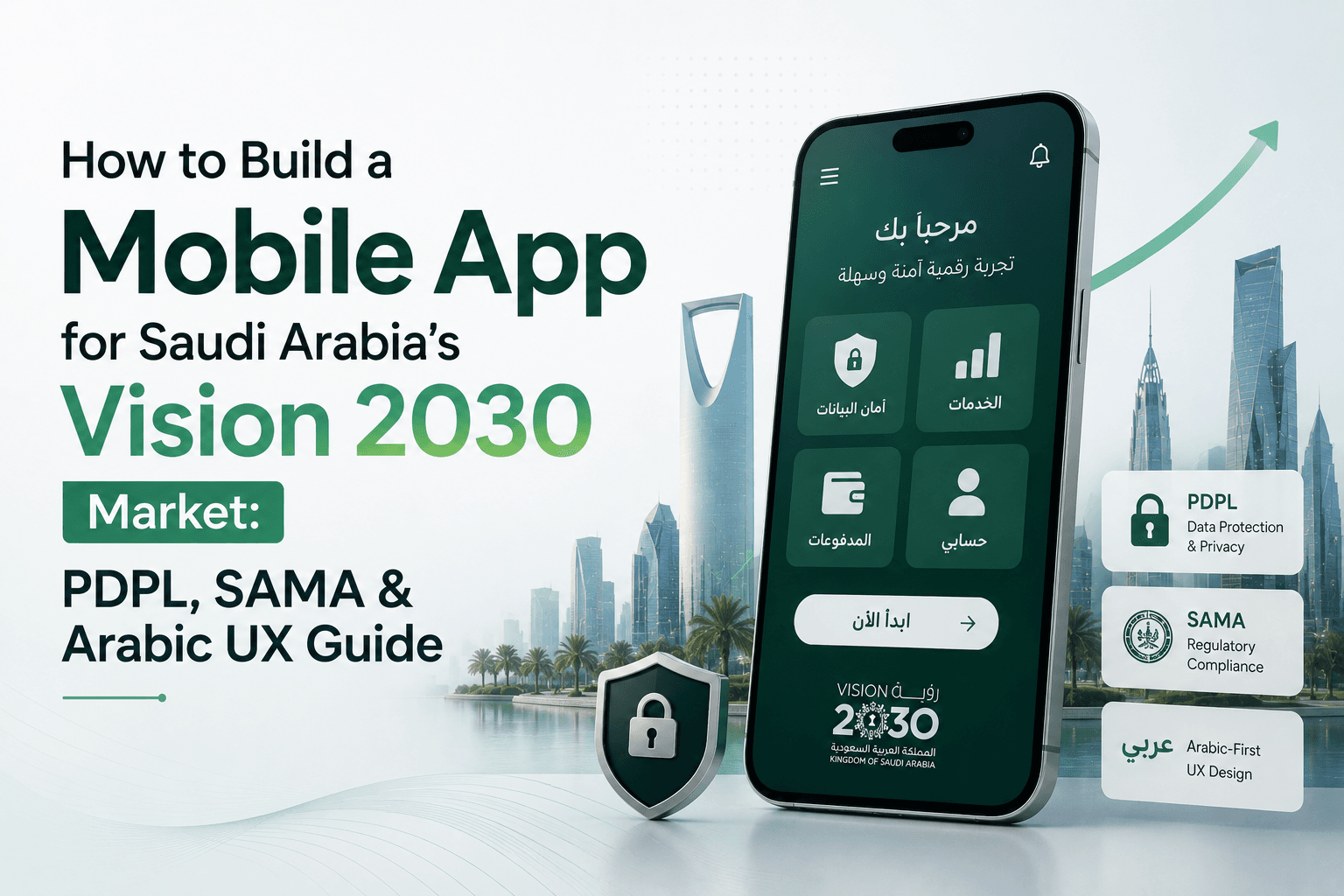
Saudi Arabia's Vision 2030 has pushed government services, banking, retail, healthcare and logistics toward mobile-first delivery. Customers now expect to pay, book, track and get support inside an app in Arabic, on their phone, with local payment methods like mada, Apple Pay and STC Pay.
For a business, that means the app is often the primary customer channel, not a side project. Choosing the wrong development partner costs more than budget: it costs launch time in a fast-moving market.
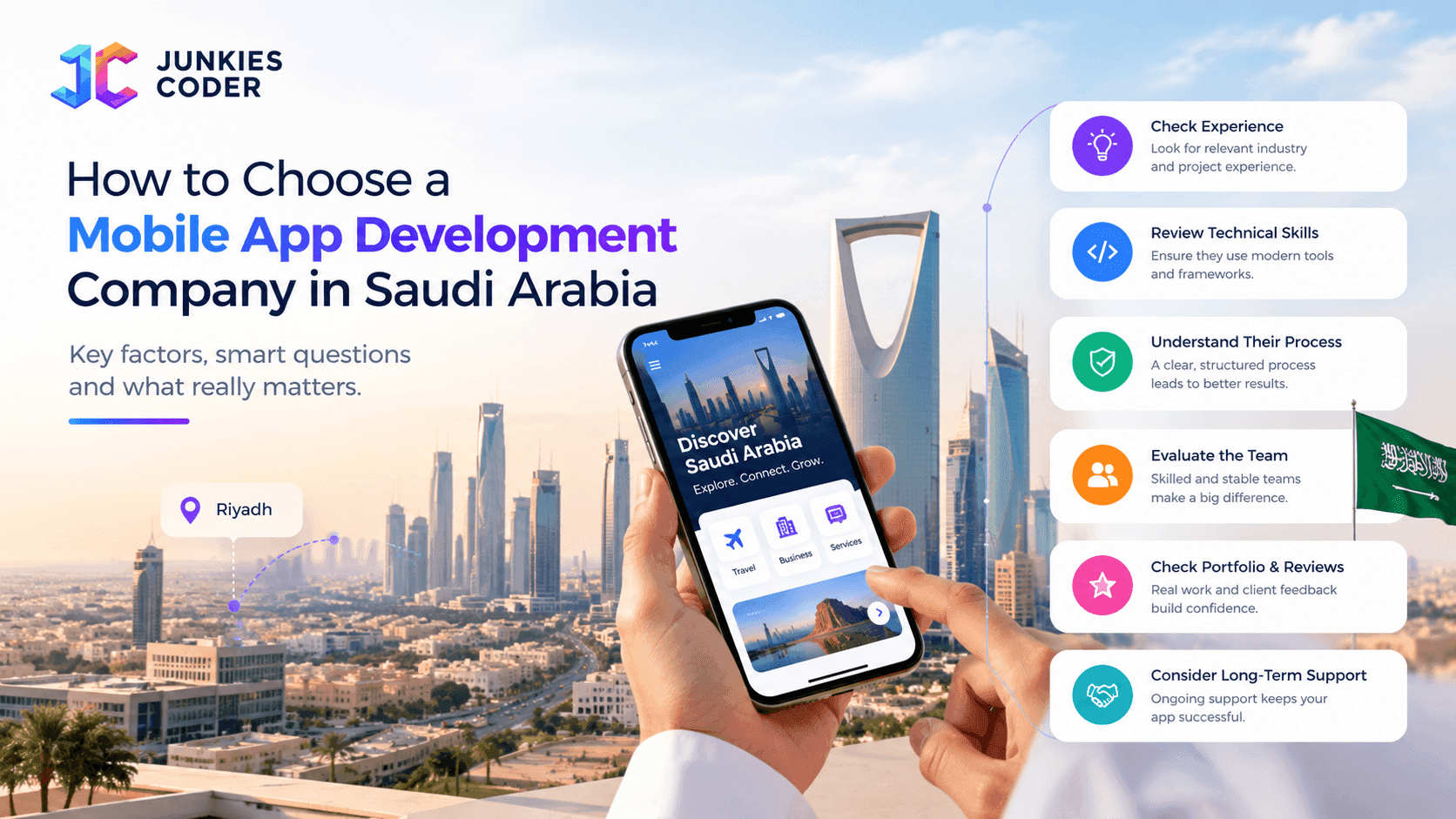
What a Good Saudi App Development Partner Must Offer?
1. Arabic-first, RTL-native design - Translating an English app into Arabic is not enough. Layouts, navigation, icons, number formats and Hijri/Gregorian dates all need to work right-to-left from day one. Ask to see RTL screens from live apps not mockups.
2. PDPL and data residency awareness - The PDPL governs how personal data of people in Saudi Arabia is collected, stored and transferred. Your developer should be able to explain where your data will be hosted, how cross-border transfers are handled, and how consent is captured in the app. Regulated sectors (fintech, health) may face additional sector-specific requirements.
3. Local payment and service integrations - Look for proven integration experience with mada, Apple Pay, STC Pay, local SMS gateways, and government identity services such as Nafath where relevant.
4. Cross-platform and native capability - Most Saudi startups and SMEs launch faster with cross-platform frameworks like Flutter. Enterprises with heavy device features or high performance needs may still choose native iOS (Swift) and Android (Kotlin). A good partner recommends based on your goals, not on what they happen to sell.
5. Post-launch support - Apps need updates for new OS versions, security patches and feature growth. Confirm support terms, response times and who owns the source code before you sign. Local Riyadh Company vs. Offshore Partner: Which Is Better?
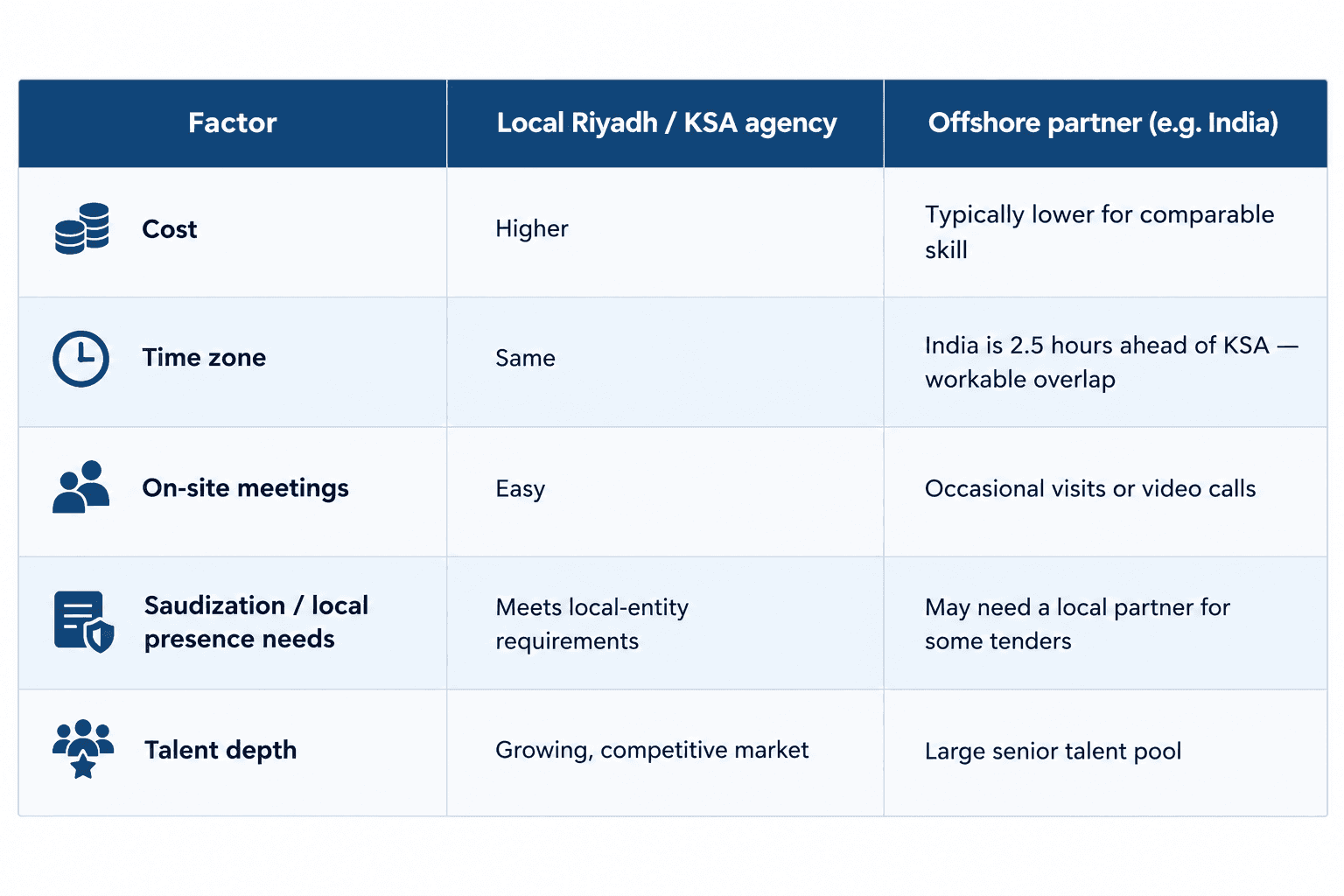
For government tenders that require a local entity, a Saudi-registered Company (or a partnership with one) is usually necessary. For private-sector apps, a hybrid model local account management with an offshore engineering team often gives the best balance of cost and speed for App development company in Saudi Arabia.
Mobile App vs. Web vs. Custom Software: What Do You Actually Need?
Mobile app: best when customers return often (ordering, booking, banking, loyalty).
Web platform: best for discovery, SEO, B2B portals and admin dashboards.
Custom software: best for internal operations: ERP add-ons, HR systems, logistics and workflow automation.
Many Saudi projects need all three: a customer app, a web portal, and an admin back office sharing one API. If that's you, choose a software development company that can deliver the full stack, rather than coordinating three vendors.
Red Flags When Comparing Saudi Software Companies
- No live apps in the App Store or Google Play you can download and test
- Arabic shown only in design files, never in a shipped product
- Vague answers about where data is hosted
- A fixed price quoted before any discovery or scoping
- Source code ownership not stated in the contract by top mobile app development companies in Saudi Arabia
- No named project manager or single point of contact
Questions to Ask Before You Sign Contract with App Development Company
Can you show three live apps with Arabic RTL interfaces?
Where will our data be hosted, and how do you handle PDPL requirements?
Which payment gateways have you integrated in Saudi Arabia?
Flutter or native - why, for our specific app?
Who owns the source code and IP at the end of the project?
What does post-launch support cost, and what is the response time?
Can we speak with a current client in the GCC?
Where Junkies Coder Fits
Junkies Coder is a software development company with offices in Riyadh, working with clients across Saudi Arabia, the UAE, West Africa, USA, EU and India. We build cross-platform (Flutter) and native mobile apps, web platforms and AI-enabled enterprise software, with Arabic RTL and GCC payment integrations as standard parts of our Saudi projects.
Consider us if you want a full-stack team (app, web and back office) with senior engineers at offshore cost and same-day time-zone overlap with Riyadh. Look elsewhere if your project is a government tender that strictly requires a Saudi-registered prime contractor with on-site staff.
Explore our mobile app development services in Saudi Arabia →
Frequently Asked Questions
How do I choose a mobile app development company in Saudi Arabia?
Check for live Arabic RTL apps, clear PDPL and data-hosting answers, experience with local payment gateways like mada and STC Pay, clear source-code ownership, and GCC client references you can contact.
How much does it cost to build an app in Saudi Arabia?
Cost depends on features, platforms, integrations and the team's location. A simple MVP costs far less than a multi-sided marketplace or fintech app. Ask for a paid discovery phase to get a reliable estimate instead of an early fixed quote.
Is it better to hire a Riyadh software company or an offshore team?
Local firms suit government tenders and projects needing on-site presence. Offshore or hybrid teams usually suit private-sector apps where cost and senior engineering depth matter more than physical proximity.
Does my app need to comply with Saudi data protection law?
Yes, if it processes personal data of people in Saudi Arabia. The Personal Data Protection Law (PDPL) covers consent, data storage and cross-border transfers. Confirm hosting and transfer arrangements with your developer and legal advisor.
Should I build my Saudi app in Flutter or native?
Flutter is usually faster and more cost-effective for launching on iOS and Android together. Native development suits apps with heavy hardware use or demanding performance requirements.