Company
About Us
Our Vision, Mission & Culture
Our Portfolio
Work That Shipped, then Scaled
Contact us
We're a one step away from you.
Our Partner Program
We ensure Win-Win for both Parties.
Industries
Automotive
We Serve to Vehicles, EV, Fleet & CKD.
Lifestyle
Apps for social, music, fitness & on-demand platforms.
Media & Entertainment
Explore top media and entertainment companies shaping the future of content and digital entertainment.
Manufacturing
Produces goods from raw materials or components.
Adult Entertainment
Digital platforms powering streaming, subscriptions, and modern entertainment experiences.
Real Estate
Smart real estate apps that simplify property discovery, virtual tours, lead management, and seamless transactions.
Healthcare
System improves physical and mental well-being.
Agriculture
The tech, science, and practice cultivate AgriTech.
FinTech
For digital banking, payments, compliance, and embedded finance Apps.
Retail & E-Commerce
Sells products to customers through physical stores and online platforms.
Logistics
AI-powered logistics app development focused on smarter routing, real-time visibility, automation, and future-ready supply chains.
Travel
A travel app for trip planning, destination discovery, and easy bookings.
Service
AI Development
AI Development Services
Enterprise AI solutions that enhance efficiency and data-driven growth.
Enterprise AI Product Deployment
Move AI models from prototype to production with scalable deployment.
Agentic AI Engineering Services
Production-ready AI agents built for real business needs.
Generative AI Development
Enterprise GenAI solutions using LLMs, RAG, fine-tuning, and AI agents.
AI Agent Development
Custom AI agents for intelligent automation.
AI Chatbot Development Services
Build secure, scalable AI chatbots with RAG and smart integrations.
RAG Development Services
Advanced RAG with hybrid retrieval, reranking, and agentic AI.
Mobile App Development
Mobile App Development Services
Trusted mobile app development company building custom Android and iOS apps.
iOS App Development
A results-driven iOS app development company building secure, scalable apps.
Android App Development
Innovative, scalable Android applications tailored to your business requirements.
Cross-Platform App Development
High-performance apps that run across iOS, Android, and web platforms.
Progressive Web App Development
Custom PWA development company engineering app-grade performance across all browsers.
MVP Development Services
Build faster, validate smarter, and scale with confidence.
AI-Ready Application Modernization
Headless CMS Development Company
Custom Software Development
Enterprise-grade custom software for seamless integration and sustainable growth.
Legacy Application Modernization
Cloud migration, microservices, and secure refactoring to modernize legacy systems.
SaaS Application Development
Full-stack SaaS with multi-tenant architecture, AI integration, and cloud-native deployment.
Business Automation
Social Media Automation
Ship lifecycle campaigns, recover abandoned carts, and personalize every send with AI.
Email Automation Services
Ship lifecycle campaigns, recover abandoned carts, and personalize every send with AI.
Whatsapp CRM Software
Route leads, control vendor access, and close every deal on WhatsApp CRM software.
Software Development
Software Integration Development
Real-time integration of enterprise apps, data systems, and 3rd-party services.
Software Development Outsourcing
Full-cycle engineering partnership from ideation to deployment and AMC.
Enterprise Software Development
MACH platforms engineered for enterprise growth and operational efficiency.
Cross Platform App Development
Flutter App Development Company
Single Dart codebase for iOS, Android, and web for Enterprise-grade.
React Native App Development
Robust mobile apps with native performance using React Native technology.
Hire
Full Stack
Hire React.js Developer
Hire WordPress Developer
Hire Shopify Developer
Hire MERN Stack Developer
Hire Golang Developer
Hire Rust Developer
Hire Angular Developer
Hire Strapi Developer
Mobile
Hire iOS Developer
Hire React Native Developer
Hire Xamarin Mobile App Developer
Hire Flutter Developer
Cloud & DevOps
Hire DevOps Developer
AI & Data
Hire LLM Developer
Hire NPL Developer
Hire Power BI Developer
Hire AI Developer
Blockchain
Hire Solana Developer
Hire Solidity Developer
Hire NFT Developer
Hire Web3 Developer
Insights
Blog
Trends, Technology, AI, and Industry Insights.
Listicles
Curated lists of top Apps companies in 2026
Press Releases
Latest Market News and Updates!
Junkies Coder provides CMS migration services for startups, SMEs, and enterprises looking to modernize their digital platforms. We help businesses migrate website content, databases, and existing CMS functionality while improving platform compatibility, integrations, and content management workflows. Our migration process includes content mapping, URL redirects, technical SEO checks, and post-migration validation to help maintain website functionality, protect search visibility, and support future business growth.
CMS Migration Services for Modern Business Platforms
Empowering awards, featured in news, and recognition to Drive Innovation and Success with our unparalleled expertise and commitment to excellence.
10+
Years of experience
15+
Countries Served
25$
Average cost P/H
95%
Positive Feedbacks
500+
Projects delivered
50+
Experts & Engineers
CORE FEATURES
Move your website and content infrastructure with a migration plan tailored to your current CMS, target platform, integrations, and publishing workflows. Each service addresses a specific part of the transition, from content mapping to launch validation.
CMS Platform Migration
Content and Media Migration
Headless CMS Migration
SEO-Aware Migration
Database and API Migration
Migration Testing and Launch Support
We use a structured migration workflow to assess the existing platform, plan content and functionality changes, validate the target environment, and prepare for launch. Each stage is aligned with the project's scope and dependencies.
Review the current CMS, website structure, content inventory, custom features, databases, integrations, and known technical limitations.
Define the target platform, content mapping, URL strategy, technical dependencies, testing requirements, migration sequence, and rollback considerations.
Configure the target CMS, content models, templates, user permissions, frontend connections, and required integrations.
Transfer the agreed content and assets, validate field mappings, check data completeness, and resolve migration errors.
Test important user journeys, forms, integrations, redirects, metadata, responsive behaviour, performance, and access permissions.
Deploy the approved migration, check production functionality, monitor errors and search-related issues, and resolve problems within the agreed support scope.
A well-planned CMS migration can make content easier to manage, simplify integrations, and support future product changes. We assess the opportunities to improve your content architecture and platform maintainability as part of the migration.

Industry
Social Media
Platform
Cross-Platform - Flutter & iOS
Location
Mumbai, India
Outcomes
Creator Economy
DeepStory wanted to solve the one problem every short video platform ignores. We built a gesture-first iOS and Android app where a single swipe delivers related content instantly, with no ads and no manual searching.

Industry
Maternity & Nursing Fashion
Platform
Website + Multi-Language Storefront
Location
Denmark
Outcomes
Unified Brand Experience Across Markets
Carriwell needed a website that matched the comfort and trust behind its products, and Junkies Coder delivered a seamless, user-friendly platform with multi-language storefronts and a brand experience built around expecting and nursing mothers.

Industry
Manufacturing
Platform
Corporate Website & E-Commerce
Location
Dammam, Saudi Arabia
Outcomes
Unified Digital Platform
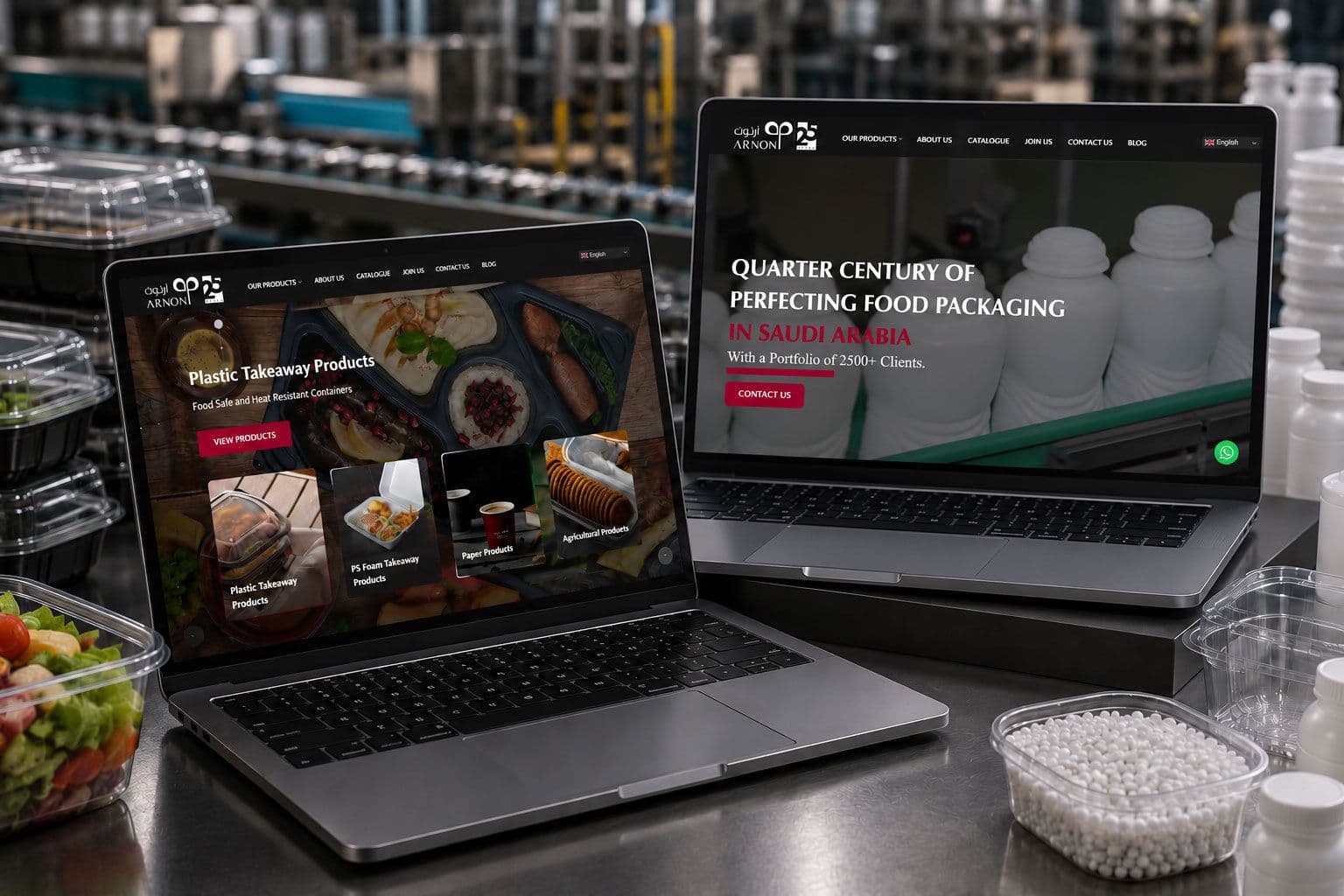
Arnon Plastic Industries needed a modern digital presence to match its scale as a 25-year manufacturing leader, and Junkies Coder delivered a corporate website with an integrated product catalogue, dual service-line navigation, and a dedicated e-commerce store, giving Arnon a unified platform across its food packaging and building insulation divisions.
Whether you're looking to develop a digital solution from scratch, scale your current offerings, or fully modernize your system, we are here to help.
Tell us about your current CMS, content volume, integration requirements, and target platform. We can help define a migration scope that fits your technical and business needs.
Smart solutions designed to adapt across industries effortlessly, helping businesses streamline operations, enhance performance, and drive sustainable growth.
We follow a transparent, collaborative process, from discovery to deployment. Designed to help founders move fast, stay lean, and build reliable, scalable products.
We explore your vision, goals, and market to create a strategic roadmap through meetings, assessments, and planning.
Wireframes and mockups bring your product to life with intuitive, user-focused design ready for seamless implementation.
We build clean, scalable code supported by testing plans and bug fixing to ensure stability, performance, and reliability.
Agile sprints drive continuous improvement. We support product launch, PR, investor readiness, and long-term growth strategies.
Shalehin Modasia
Marketing DirectorENGAGEMENT MODELS
We adapt to the way your business operates. Whether you need end-to-end ownership of an engagement, additional senior engineering capacity, or a long-term dedicated team aligned to your goals, our engagement models give you the flexibility to scale delivery at the pace your business demands.
When your in-house team needs specialized engineering capacity without the overhead of long-term hiring, our team augmentation model fills that gap immediately. Our engineers integrate directly with your existing workflows, bring the technical depth required to maintain delivery quality and adapt to your tools, processes and communication standards from day one. You retain full control over direction while we provide the execution capacity your roadmap requires.
Get a free consultationFor engagements that require sustained focus and long-term commitment, our dedicated team model delivers the consistency and accountability that project-based arrangements cannot. We assemble a cross-functional team of engineers, designers and QA specialists built exclusively around your engagement, operating within your delivery cadence with full sprint ownership, direct stakeholder communication and complete accountability from initiation through post-launch evolution.
Get a free consultationWhen you need a single partner to manage a complex engagement end to end while your own teams stay focused on core business operations, we assume complete ownership. From discovery and architecture through design, engineering, testing and deployment, every technical decision and every delivery milestone sits with our team. You define the business objectives. We translate them into production ready outcomes with full transparency at every stage.
Get a free consultationUpgrade your existing CMS, modernize its architecture and content workflows, or migrate to another content management platform when business requirements justify the change. Each approach differs in scope, content transfer requirements, integrations, SEO considerations, cost, and technical impact.
| Comparison Factor | PATH A: Upgrade Existing CMS | PATH B: Modernize Existing CMS | PATH C: Migrate to Another CMS |
|---|---|---|---|
| What It Involves | Upgrade the current CMS to a supported version, apply security updates, address compatibility issues, update extensions or plugins, and validate existing content and functionality. | Improve the existing CMS through content model restructuring, workflow optimization, plugin or module replacement, integration improvements, performance enhancements, and architectural changes. | Move website content, media, content types, users, metadata, URLs, and required functionality to a different CMS, including a traditional, headless, or enterprise content management platform. |
| Best Suited For | Websites and digital platforms that meet current business needs but use an outdated CMS version, unsupported extensions, or components that require updates. | Businesses that want to improve content operations, scalability, editorial workflows, integrations, or website performance while retaining the current CMS as the foundation. | Businesses whose current CMS has limitations involving scalability, flexibility, content delivery, licensing, integrations, editorial requirements, or long-term platform support. |
| Keeps the Existing CMS | Yes. The current CMS remains in place, with its version and supporting components updated where required. | Usually. The current CMS is retained while its configuration, content architecture, workflows, or technical implementation are improved. | Not necessarily. The destination may be a different CMS, a headless CMS, or a composable content platform. |
| CMS Version Considerations | Review the current and target CMS versions, supported upgrade paths, deprecated features, server requirements, database compatibility, and extension compatibility before upgrading. | Assess whether the current CMS version supports the required architecture, APIs, content models, workflow features, and integration changes. Upgrade the CMS if needed to enable modernization. | Evaluate the source CMS version and the target platform's current supported release, migration tools, content APIs, data structures, and long-term support requirements. |
| Scale of Change | Generally the most limited approach, although major version upgrades may require substantial code, configuration, extension, and template changes. | Moderate to substantial change, depending on the extent of content restructuring, custom development, workflow redesign, and integration updates. | Typically the broadest change because content, templates, functionality, integrations, publishing processes, and sometimes the frontend must be adapted to the destination platform. |
| Security and Maintenance | Address known CMS vulnerabilities, update supported extensions, review permissions, and verify that the hosting environment meets the upgraded version's requirements. Ongoing maintenance remains necessary. | Improve security practices, access controls, extension management, configuration, and operational processes while maintaining updates for the existing CMS and its dependencies. | Review the destination platform's security controls, user permissions, authentication, hosting model, extension ecosystem, update policy, and maintenance responsibilities. Migration does not eliminate ongoing security obligations. |
| Plugins, Extensions, and Modules | Check whether existing plugins, themes, modules, and custom extensions support the target CMS version. Replace or update incompatible components and test dependent functionality. | Remove redundant extensions, replace unsupported components, consolidate overlapping functionality, and evaluate native CMS capabilities or custom integrations. | Map source-platform plugins and modules to destination-platform features, extensions, APIs, or custom implementations. Not every source feature will have a direct equivalent. |
| Content Models and Taxonomy | Preserve existing content types, categories, tags, relationships, custom fields, and taxonomies while checking for compatibility changes. | Restructure content types, fields, taxonomies, relationships, and reusable components to support more consistent publishing and content reuse. | Map source content types, fields, taxonomies, relationships, and structured data to the destination CMS. Define transformation rules for fields or structures that do not align directly. |
| Content and Media Transfer | Existing content and media generally remain within the current CMS, but upgrade testing should verify rendering, formatting, media references, and content integrity. | Reorganize content and media where needed, resolve duplicate or outdated assets, and improve metadata and content governance. | Extract, transform, and import required pages, posts, documents, images, downloads, metadata, and relationships. Validate record counts, media links, formatting, and representative content after transfer. |
| SEO and URL Continuity | Check that existing URLs, canonical tags, metadata, structured data, XML sitemaps, robots directives, and internal links remain correct after the upgrade. | Improve metadata management, canonical handling, internal linking, structured data, redirects, and publishing controls without creating unnecessary URL changes. | Map source URLs to destination URLs, implement relevant redirects, preserve important metadata and internal links, update canonical tags and sitemaps, and validate crawlability and indexability after launch. URL changes should be minimized where practical. |
| Integrations and APIs | Test existing CRM, analytics, marketing automation, search, payment, authentication, and other connected services for compatibility with the upgraded CMS and extensions. | Improve API reliability, integration architecture, data synchronization, webhook handling, and connections to business systems as required. | Reconnect or rebuild required integrations using destination-platform APIs, webhooks, middleware, or alternative connectors. Validate authentication, data mapping, synchronization, and error handling. |
| Headless CMS and Frontend Architecture | A conventional CMS upgrade may retain the existing frontend and rendering model, provided the target version supports it. | Modernize content delivery by improving APIs, separating frontend concerns, or introducing headless capabilities where supported and justified. | Choose whether to move to another traditional CMS or adopt a headless CMS with a separate frontend. Plan content APIs, rendering, preview, publishing, caching, and frontend routing accordingly. |
| User Roles and Editorial Workflows | Preserve and validate user accounts, roles, permissions, approval processes, scheduled publishing, and editorial workflows after the upgrade. | Refine permissions, editorial stages, localization processes, content governance, approvals, and publishing responsibilities. | Map user roles, permissions, approval workflows, scheduled publishing, localization, and editorial responsibilities to the destination CMS, recreating workflows where direct equivalents are unavailable. |
| Performance and Scalability | Test response times, caching, database performance, background tasks, and server compatibility after upgrading the CMS and its components. | Optimize content delivery, caching, database queries, media handling, search, and publishing workflows according to identified bottlenecks. | Evaluate destination-platform performance, hosting, caching, CDN integration, search, media delivery, and content delivery architecture against expected traffic and editorial demand. |
| Testing Requirements | Conduct CMS upgrade compatibility checks, extension testing, content rendering checks, permission validation, integration testing, and regression testing of important website workflows. | Test redesigned content structures, editorial workflows, integrations, performance changes, permissions, and affected user journeys. | Test content mapping, migration completeness, media and link integrity, templates, forms, search, redirects, metadata, permissions, integrations, accessibility, and critical business workflows. |
| Deployment, Rollback, and Data Validation | Back up the CMS, database, files, and configuration; test the upgrade in a staging environment; prepare rollback procedures; and validate the production deployment. | Deploy changes in controlled stages, maintain backups, validate migrated or restructured content, and prepare recovery steps for changes affecting the live website. | Plan content freeze or synchronization, source and destination backups, migration rehearsals, cutover timing, DNS or routing changes where applicable, reconciliation checks, and rollback criteria before launch. |
| Business Impact | Usually causes less architectural disruption, although major upgrades may require maintenance windows and changes to the hosting environment or extensions. | Can improve content operations and maintainability while retaining much of the existing platform, but may require changes to editorial processes and technical workflows. | May enable capabilities unavailable in the existing CMS, but can require greater investment, staff training, workflow adaptation, integration changes, and coordinated launch planning. |
| Cost and Timeline Factors | Depend on the current CMS and version, upgrade path, customizations, extension compatibility, hosting requirements, and testing scope. | Depend on the level of redesign, content model changes, custom development, workflow improvements, integration work, and performance requirements. | Depend on content volume, content complexity, destination platform, data transformation, media migration, URL mapping, custom functionality, integrations, frontend work, and validation requirements. |
| Recommended Next Step | Audit the current CMS version, hosting environment, plugins or extensions, custom code, security status, and target-version requirements. | Assess content architecture, editorial workflows, integrations, performance issues, and platform limitations to define a prioritized modernization plan. | Compare destination CMS options against business and technical requirements, inventory content and integrations, map URLs and content models, and prepare a migration and launch plan. |
Real stories from real partners who experienced clarity, accountability, and measurable business growth.
By combining innovation, strategy, and modern technologies, we help businesses improve efficiency, scale faster, and achieve sustainable growth.
Featured Technologies
OpenAi
Claude
Falcon
Gemini
Mistral
Grok
Meta
Every migration should account for the source platform, data sensitivity, access permissions, hosting environment, and applicable business requirements. We review transfer methods, environment configuration, user access, third-party dependencies, and data validation needs as part of the agreed project scope. Any formal compliance requirements should be confirmed for the specific project rather than assumed.
Data Integrity Validation

Access Control Review
HIPAA

Dependency Compatibility

Privacy and Regulatory Requirements Review

GDPR

CMS migration services help businesses move website content, media, data structures, and relevant functionality from an existing content management system to another platform or a newer architecture.
Migration may be appropriate when a CMS has limited functionality, difficult maintenance, compatibility issues, growing integration needs, or content workflows that no longer support business operations.
The supported source and target platforms depend on the project requirements. Migration may involve platforms such as WordPress, Drupal, Joomla, Strapi, or a custom CMS, subject to technical assessment.
Yes, where the existing design is compatible with the target architecture. Some migrations can retain the current visual experience, while others may require template changes or frontend redevelopment.
SEO planning can include URL inventory, redirect mapping, metadata and canonical validation, internal-link checks, sitemap updates, and post-launch monitoring. Rankings cannot be guaranteed because search performance also depends on technical implementation, content, competition, and search engine processing.
Content may require transformation when source and target CMS structures differ. Content mapping, sample migrations, data validation, and backups help identify problems before launch.
The timeline depends on the number of pages, content types, custom functionality, integrations, target platform, and testing requirements. A realistic schedule should be prepared after reviewing the existing environment.
Yes, when the source content and business requirements support that approach. The project may involve content model redesign, API integration, and a separate frontend built with technologies such as Next.js or React.
Post-migration support can cover production checks, integration fixes, content corrections, technical troubleshooting, and agreed maintenance activities.
Share your current CMS, target platform if known, approximate content volume, important integrations, and migration objectives. These details help establish the scope and identify the main technical dependencies.