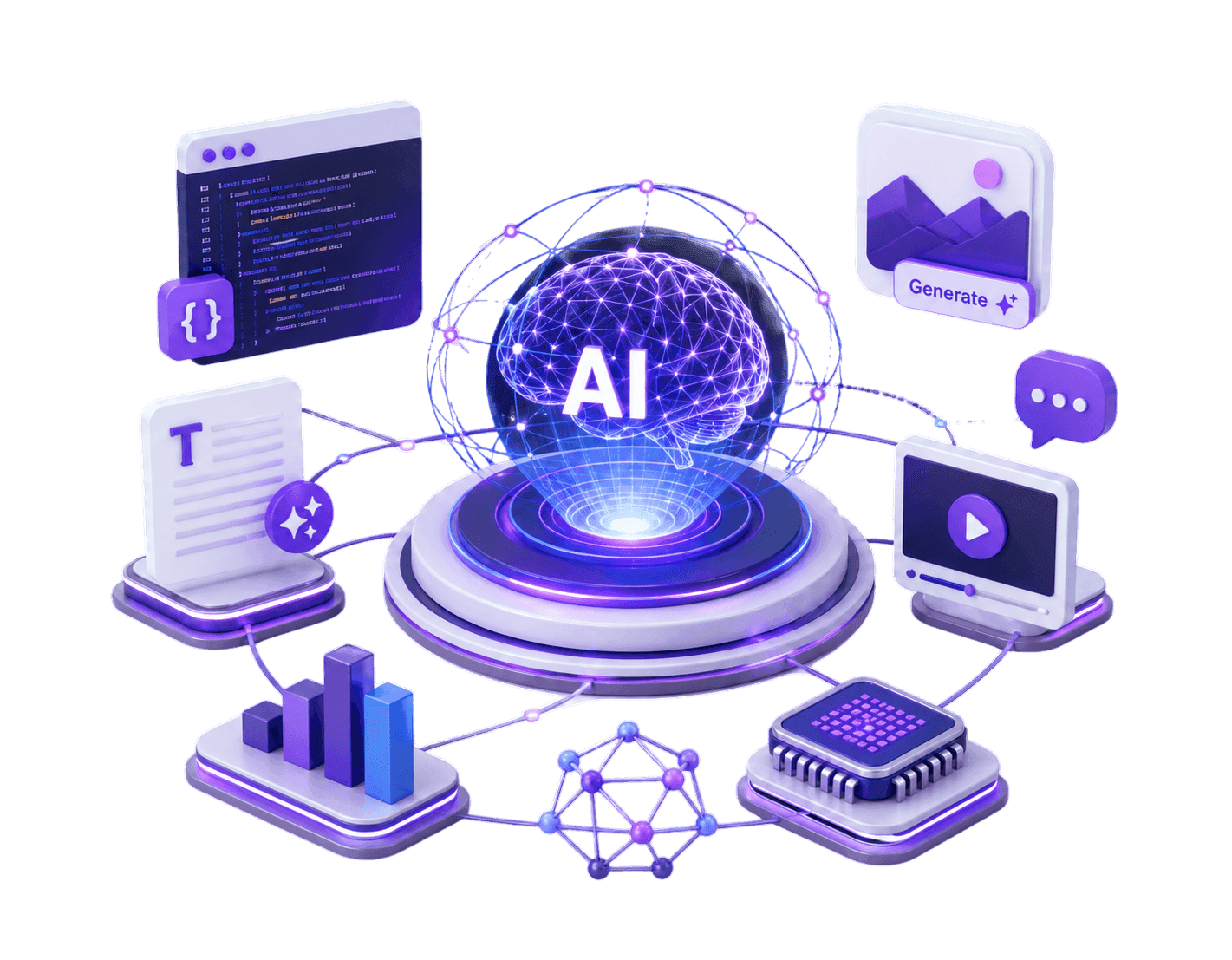
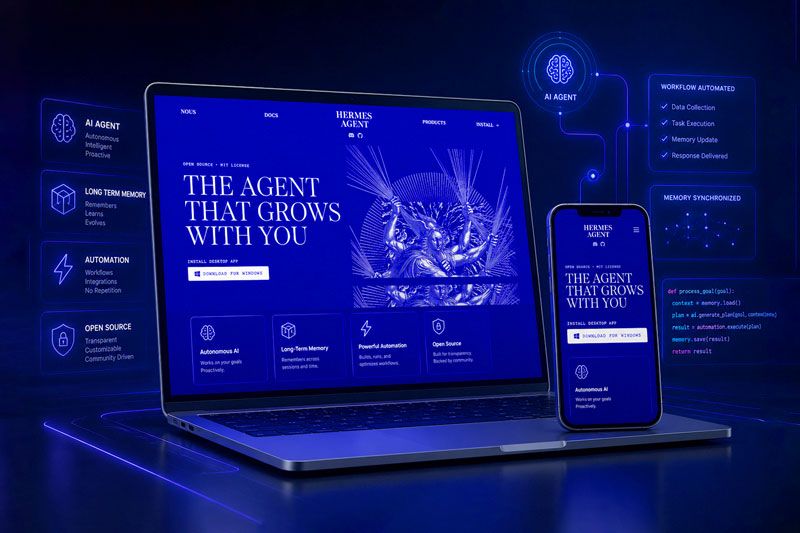
We build custom Generative AI solutions that automate complex workflows, streamline operations, and enhance decision-making. From intelligent AI agents and LLM-powered applications to advanced automation systems, we create solutions tailored to your business needs. Empower your teams with smarter technology that improves efficiency, reduces manual effort, and drives scalable innovation.

LLM & Fine-Tuning Specialists
Enterprise RAG & Agentic Architecture
Empowering awards and recognition to Drive Innovation and Success with our unparalleled expertise and commitment to excellence.
Years of experience
Countries Served
Average cost P/H
Positive Feedbacks
Happy Success Stories
Experts & Engineers
CORE FEATURES
Combining cutting-edge foundation models with enterprise data governance to deliver resilient, production-grade Generative AI software.
Zero Data Egress & Privacy First
Production RAG Vector Pipelines
LoRA & QLoRA Fine-Tuning Expertise
Autonomous Agentic AI Workflows
Enterprise Guardrails & NeMo Protection
100% IP & Custom Code Sovereignty
A transparent, milestone-driven development process operating in sync with your product team from data audit and model selection to RAG deployment and continuous guardrail monitoring.
Evaluating corporate data readiness, defining accuracy metrics, auditing privacy requirements, and selecting foundation model architectures.
Designing vector database schemas, embedding pipelines, API gateway routing, and security guardrail protocols.
Developing structured prompt templates, testing baseline inference accuracy, and validating proof-of-concept performance.
Executing LoRA/QLoRA model adaptation, building custom tool connectors, and integrating vector retrieval layers.
Testing prompt injection resistance, verifying PII redaction, auditing EU AI Act compliance, and load testing GPU inference pools.
Deploying to cloud infrastructure (AWS/Azure), implementing real-time telemetry monitoring, and managing automated model updates.
OUR EXPERTISE
From custom LLM fine-tuning to production RAG pipelines and autonomous agentic workflows, we build secure, scalable Generative AI solutions engineered for enterprise data privacy, real-time context retrieval, and measurable ROI.
Do not risk exposing corporate data to unshielded public models. We conduct a thorough technical discovery session to evaluate your data pipelines, RAG architecture, and security guardrails before engineering begins.

High-throughput vector indexing, hybrid semantic search, local open-source LLM hosting, and autonomous agent orchestration.
01
Combining dense vector embeddings with sparse keyword BM25 retrieval for maximum precision in enterprise RAG systems.
02
Self-directing AI agents that break down complex user instructions, invoke external APIs, and evaluate step results autonomously.
03
Memory-efficient fine-tuning techniques allowing 70B parameter models to run on cost-effective enterprise GPU instances.
04
Real-time moderation layers blocking prompt injection attacks, jailbreaks, PII leakage, and off-topic model responses.
05
High-throughput open-source LLM hosting (Llama 3, Mistral) deployed inside your private VPC with zero third-party API dependencies.
06
Vision transformer pipelines parsing complex PDF tables, engineering schematics, and invoices directly into structured JSON data.
07
Sub-millisecond query response caching reducing model API token costs by up to 60% on high-frequency enterprise prompts.
08
Automated confidence score triggers routing edge-case AI outputs to human reviewers before final operational execution.
09
Cryptographically signed logs recording prompt context, model parameters, retrieved vectors, and inference outputs for compliance auditability.
10
Accelerating LLM token generation speed by up to 3x using draft model speculative execution and FlashAttention-2 GPU kernel optimization.
11
Integrating structured graph databases with vector indices to provide deep relational reasoning and complex entity mapping for enterprise knowledge management.
12
Implementing Direct Preference Optimization pipelines to continuously align model outputs with internal brand guidelines, domain terminology, and user feedback.
Tailored Generative AI engineering for Financial Services, Healthcare & Life Sciences, Enterprise SaaS, LegalTech, and E-Commerce.
From technical proof-of-concept to enterprise deployment, our engineering pods maintain strict quality benchmarks and complete source code ownership.
Collaborative scoping workshop mapping business goals to high-ROI Generative AI architectures.
Cleaning, chunking, and vectorizing proprietary documentation into high-speed vector indices.
Configuring hybrid search algorithms, fine-tuning model weights, and building API microservices.
Connecting AI capabilities to mobile apps, web dashboards, or existing enterprise ERP interfaces.
Benchmarking RAG retrieval precision, context recall, latency metrics, and hallucination rates.
Production rollout on cloud or local VPC, automated scaling management, and ongoing SLA maintenance.
Shalehin Modasia
Marketing DirectorENGAGEMENT MODELS
Select the collaboration structure that fits your project scope, predictability needs, and deployment timeline.
A focused 4-to-6 week engineering sprint delivering a functional proof-of-concept RAG pipeline or fine-tuned model prototype with clear ROI benchmarks.
Request Scoping SprintSenior machine learning engineers, prompt architects, and full-stack developers operating as a dedicated pod aligned with your development time zone.
Build Dedicated PodFull-scale software modernization embedding custom Generative AI agents, RAG architectures, and enterprise guardrails into core business operations.
Discuss Enterprise TermsReal stories from real partners who experienced clarity, accountability, and measurable business growth.
We select foundation models, vector databases, and orchestration frameworks justified by inference latency, data security, and long-term cost efficiency.
Featured Technologies
OpenAi
Claude
Falcon
Gemini
Mistral
Grok
Meta
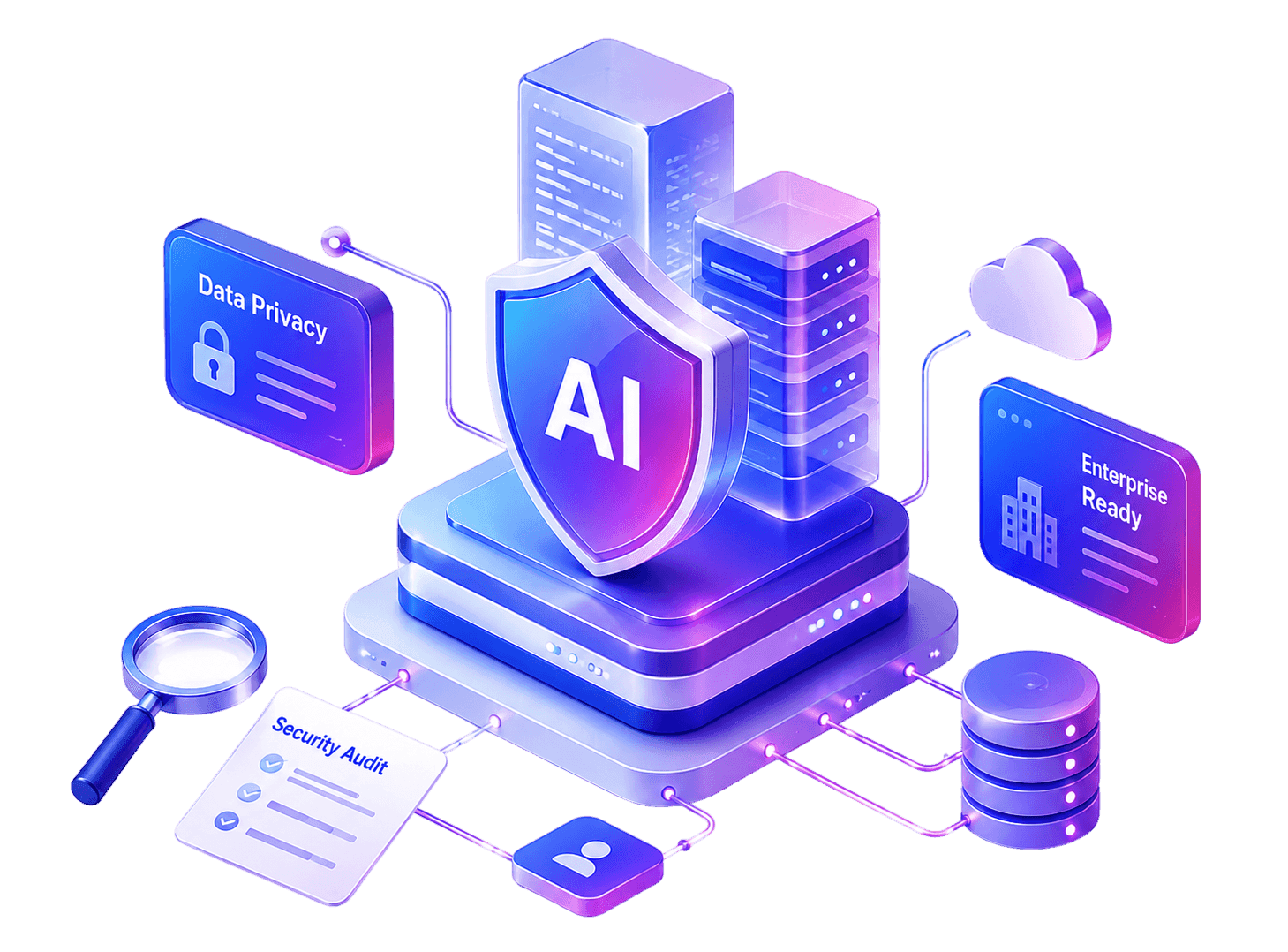
Every Generative AI solution we deploy strictly adheres to enterprise data privacy mandates, SOC 2 Type II, EU AI Act risk frameworks, and strict prompt injection defenses.
EU Artificial Intelligence Act (EU AI Act Risk Framework)
SOC 2 Type II Security & Confidentiality Standards
NIST AI Risk Management Framework (AI RMF 1.0)
OWASP Top 10 for Large Language Model Applications
ISO/IEC 42001 Artificial Intelligence Management System
General Data Protection Regulation (EU GDPR)
When you hire Junkies Coder, you partner with a senior engineering team dedicated to building custom, production-grade Generative AI software, not off-the-shelf wrapper APIs. We have engineered enterprise solutions across 15 countries, combining proprietary foundation models with open-source fine-tuning and strict data guardrails. Every engineering decision below reflects proven production patterns operating in complex corporate environments.
Client-side PII masking and private cloud model hosting ensuring enterprise data remains fully confidential.
High-precision vector retrieval pipelines eliminating model hallucinations with verifiable source citations.
Advanced LoRA and QLoRA model adaptation delivering domain-specific expertise at a fraction of full training costs.
Multi-agent systems using ReAct reasoning loops to automate complex business workflows autonomously.
Built-in risk assessment frameworks, bias auditing, and immutable decision logging for regulatory safety.
100% ownership of custom model weights, fine-tuning scripts, vector schemas, and deployment codebases.
Model quantizing, vLLM acceleration, and prompt caching engineered for maximum throughput and minimal latency.
Direct daily access to senior machine learning architects and full-stack software engineers.

Generative AI development focuses on building systems that create new, original content such as human-like text, code, high-resolution imagery, audio, or structured synthetic data using deep learning foundation models like transformers. Traditional AI primarily analyzes, classifies, or predicts outcomes based on historical patterns, whereas Generative AI generates probabilistic original outputs by understanding complex multi-dimensional semantic relationships.
Retrieval-Augmented Generation (RAG) is an architectural framework that connects Large Language Models (LLMs) to an organization's proprietary, real-time vector knowledge bases. By retrieving relevant documents via semantic vector embeddings before generating an answer, RAG eliminates model hallucinations, eliminates the need for expensive daily model retraining, and ensures strict data access controls based on corporate permissions.
Fine-tuning modifies the underlying weights of an LLM using domain-specific dataset training (such as LoRA or QLoRA), teaching the model specialized terminology, tone, or response formatting. RAG provides the model with external, up-to-date factual context at query time without altering model weights. Most enterprise systems combine both: fine-tuning for domain style and operational precision, and RAG for live data accuracy.
We enforce strict zero-data-retention API policies, deploy private dedicated model instances (such as Azure OpenAI or AWS Bedrock), or host open-source models (Llama 3, Mistral) within your isolated cloud virtual private network (VPC). All sensitive data undergoes client-side tokenization and redaction before model inference, ensuring proprietary IP is never used for vendor model retraining.
Agentic AI transitions Generative AI from passive text generation to autonomous goal execution. Agentic systems utilize ReAct (Reasoning and Acting) loops, dynamic tool selection, memory persistence, and multi-agent coordination to autonomously execute multi-step business workflows, call external REST APIs, evaluate results, and handle complex edge cases with minimal human intervention.
A targeted proof-of-concept (POC) or custom RAG pipeline typically takes 4 to 8 weeks to design, integrate, and evaluate. Full enterprise production deployments, featuring fine-tuned models, multi-agent workflows, vector database clustering, and security guardrail hardening, follow a 12 to 20 week development lifecycle.
We implement multi-layered AI guardrails (such as NVIDIA NeMo Guardrails or Llama Guard), enforce low temperature inference settings, utilize strict prompt engineering templates, and implement RAG attribution grounding. Every model response is validated against source documents before presentation, with low-confidence queries routing to human review.
Our engineers work across proprietary foundation models (OpenAI GPT-4o, Anthropic Claude 3.5, Google Gemini 1.5) and open-source foundation models (Meta Llama 3.1, Mistral, DeepSeek). For cloud orchestration, we deploy on AWS Bedrock, Azure OpenAI, Google Cloud Vertex AI, and self-hosted vLLM or Ollama clusters.
We optimize inference costs through semantic prompt caching, model routing (directing simple queries to smaller 8B models and complex tasks to 70B+ models), vector index quantization, and fine-tuning lightweight open-source models that run efficiently on dedicated GPU instances.
We design Generative AI architectures aligned with the EU AI Act risk categories, SOC 2 Type II, and NIST AI Risk Management Framework. Our implementations include immutable decision audit logging, bias testing, transparent model documentation, and automated prompt vulnerability scanning.