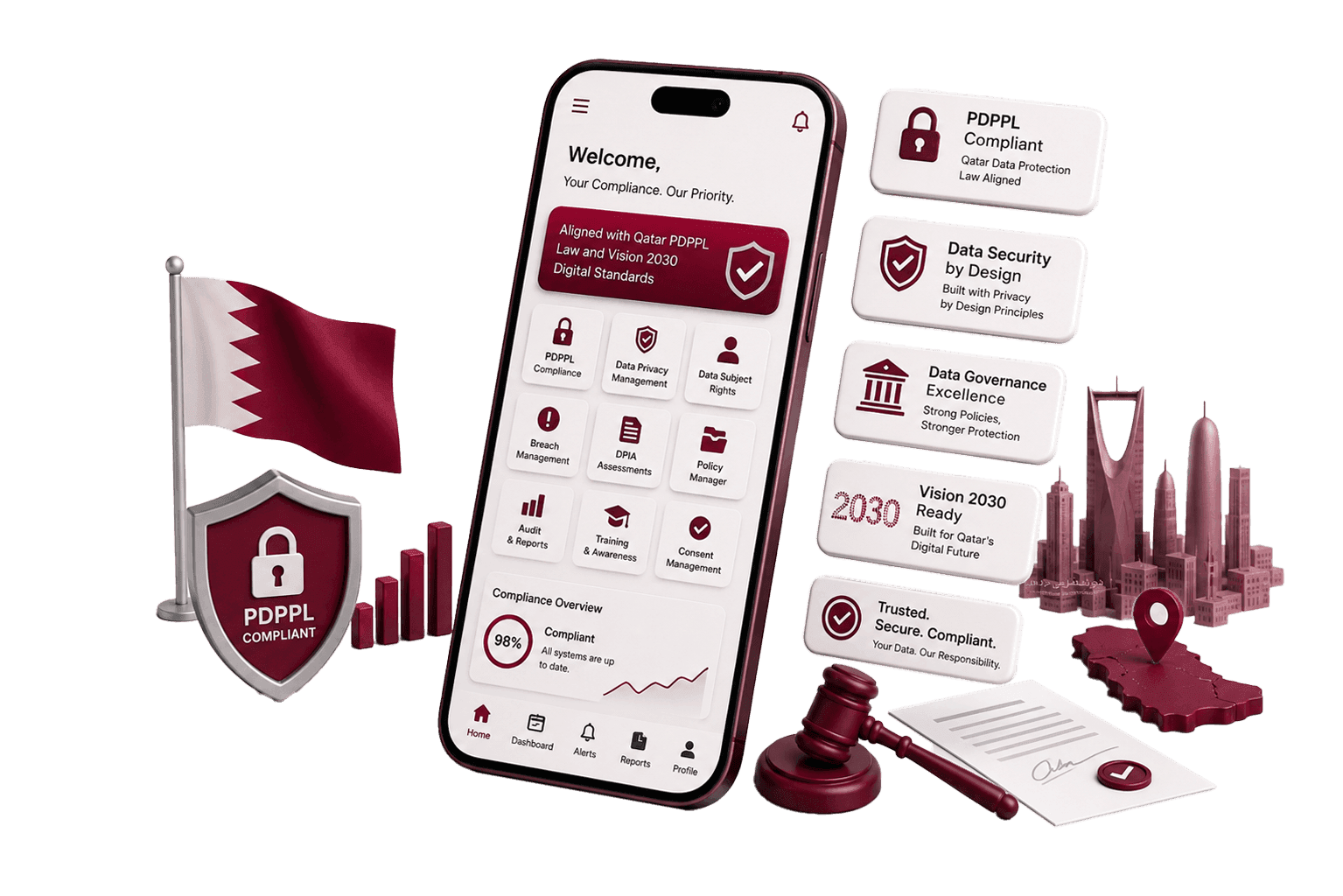
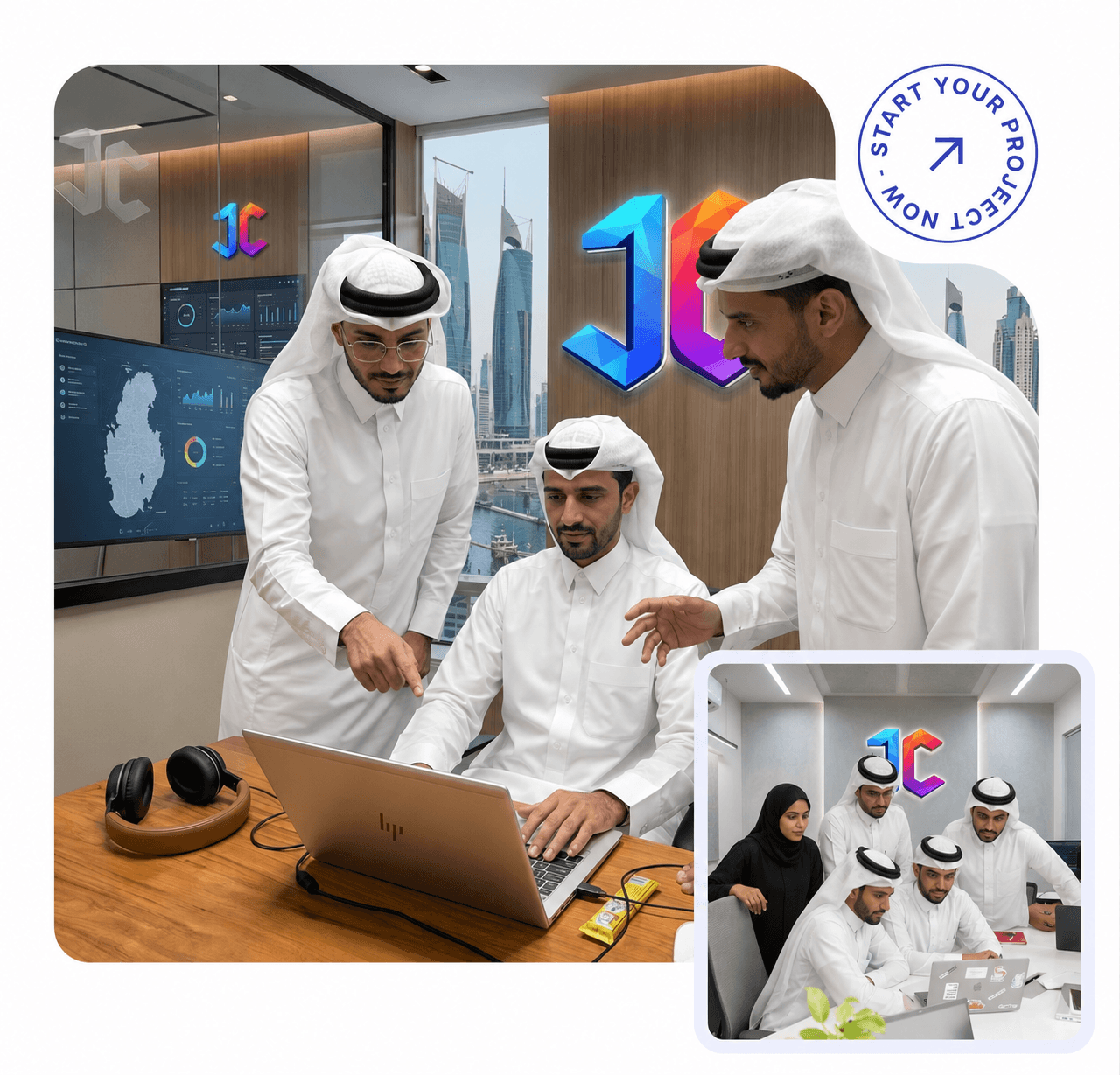
As a leading mobile app development company in Qatar, Junkies Coder helps businesses in qatar accelerate digital transformation across Doha's West Bay, Lusail City's smart urban ecosystem, and QFC's regulated fintech landscape. We build scalable mobile applications engineered for PDPPL compliance, QFC requirements, and Qatar Vision 2030 standards with seamless Arabic-English bilingual experiences.

Qatar Enterprise App Engineering
PROOF Standard Delivery
Empowering awards and recognition to Drive Innovation and Success with our unparalleled expertise and commitment to excellence.
Years of experience
Countries Served
Average cost P/H
Positive Feedbacks
Happy Success Stories
Experts & Engineers
CORE FEATURES
Full-spectrum mobile app development for Qatar businesses, PDPPL-compliant, bilingual Arabic-English, QFC-aware, and built for Qatar's Vision 2030 digital transformation agenda.
Native iOS App Development
Native Android App Development
Cross-Platform App Development
Mobile UI/UX Design and Prototyping
Mobile App Integration and API Connectivity
Mobile App Maintenance and Support
Qatar's government and enterprise projects demand delivery precision. Under the PROOF Standard, PDPPL compliance checkpoints, Arabic RTL QA, and App Store submission management are built into the timeline from discovery.
PDPPL scope, Arabic RTL targets, QFC regulatory requirements, and performance benchmarks defined in writing before wireframes begin.
Every Arabic locale requirement, PDPPL obligation, government integration, and third-party dependency documented before development starts.
Source code and assets delivered every sprint with no holdback.
Arabic and English working builds at every sprint close. Delays in writing within 24 hours.
Senior review confirms PDPPL compliance, QFC data governance, Arabic App Store metadata, and two OS version forward compatibility.
Each application is live, serving real users across Qatar's fintech, healthcare, ecommerce and enterprise operations verticals with bilingual architecture and production-grade performance.

Industry
FinTech
Platform
Cross-Platform - Flutter & iOS
Location
Canada
Outcomes
Omni-Channel
Etmad Topup needed a centralized recharge system, and Junkies Coder delivered a Flutter-based omni-channel platform with a web admin panel and Node.js backend, enabling real-time transaction visibility and full operational control across Android, iOS, and web.

Industry
Social Media
Technology
Swift - iOS
Location
Canada
Outcomes
iOS Music App
iQuQ App is a social music platform that transforms shared music experiences. Create party group, Every participant adds songs, casts votes and shapes live sessions through real time democratic playback.

Industry
Ecommerce
Platform
Cross-Platform - Flutter
Location
Bengaluru, India
Outcomes
Omni-channel Platform
Inspect & Buy App build by Junkies Coder - vision is to provide a seamless, personalized shopping experience that anticipates and fulfills the needs of customers while fostering trust and loyalty through product quality and exceptional services such as Wheelz, in-store shopping and online shopping.

Industry
Automotive
Platform
Web-Based B2B Marketplace
Location
Dubai, UAE
Outcomes
Scalable B2B Marketplace
SourceVehicle is a vehicle inventory aggregator connecting dealers with global buyers for passenger and commercial vehicles.Junkies Coder builds a scalable B2B marketplace with inventory management, multi-currency transactions, logistics and secure payments.

Industry
Agro Logistics
Technology
Web / IoT / ERP
Location
India
Outcomes
50% Reduction
Vaishnodevi Agro Resources Pvt. Ltd needed a digital tracking system to replace manual agro-logistics processes in Radhanpur, India, covering truck entries, weighbridge, seed processing, lab reporting and dispatch management.
Whether you're looking to develop a digital solution from scratch, scale your current offerings, or fully modernize your system, we are here to help.
OUR EXPERTISE
From QFC-regulated fintech platforms in West Bay to government mobility apps under Qatar's Smart City initiative and bilingual Arabic-English enterprise applications for Lusail City, we build to Qatar's compliance and performance requirements.
Qatar PDPPL compliance, Arabic RTL engineering, QFC-aware architecture, and App Store submission management built into your timeline from day one.

Qatar's market demands compliance, bilingual precision, and apps built to the performance expectations of a world-class smart city ecosystem. We deliver that from the first sprint.
01
Qatar Personal Data Privacy Protection Law compliance, consent frameworks, cross-border transfer controls, data breach notification procedures, and QFC PDPPP data governance, engineered from discovery.
02
Right-to-left navigation flows, Arabic numeral rendering, Hijri calendar support, and Qatari locale UX patterns built natively, not applied through third-party RTL wrapper libraries.
03
Mobile apps for Qatar Financial Centre-licensed entities are built with QFC PDPPP data governance controls, audit trail requirements, and access management aligned to QFC regulatory expectations.
04
App architecture aligned to Qatar's National Information and Communications Technology Plan, for government-adjacent and public services apps operating within Qatar's digital transformation agenda.
05
On-device AI inference with PDPPL-compliant data minimization, personal data processed locally, meeting Qatar's data sovereignty requirements for regulated industries.
06
Biometric authentication and Qatar National ID digital verification integration for apps requiring identity-verified access in government and financial service contexts.
07
Connectivity to Lusail City smart infrastructure APIs, Doha smart mobility platforms, and Qatar's National Broadband Network, for Smart City and field operations apps.
08
Real-time data architecture for logistics tracking, government service dashboards, and financial monitoring apps operating within Qatar's high-speed digital infrastructure.
09
Offline-capable field apps with HSE workflow, equipment inspection checklists, and ERP integration, built for Qatar's LNG, upstream, and downstream energy sector operating environment.
Smart solutions designed to adapt across industries effortlessly, helping businesses streamline operations, enhance performance, and drive sustainable growth.
From discovery to deployment, our process is built to deliver mobile apps that perform in Qatar's demanding enterprise and government digital environment.
We map your app requirements, Qatar regulatory obligations, QFC compliance needs, and Arabic-English UX standards into a structured technical scope before development begins.
Enterprise-grade wireframes and high-fidelity prototypes built to iOS HIG and Material Design standards, with bilingual Arabic RTL and English LTR validated before development starts.
Working builds delivered every two weeks with full sprint transparency, keeping Qatar enterprise stakeholders informed and in control at every development stage.
Enterprise QA across a real iOS and Android device matrix, functional, performance, regression, and bilingual UI testing completed before every Qatar market release.
Full App Store and Google Play submission management, metadata, Arabic localisation, compliance checks, and first-pass approval handled for a smooth Qatar market launch.
Ongoing OS compatibility, performance monitoring, bug resolution, and feature iteration, keeping your Qatar enterprise app stable, compliant, and competitive post-launch.
Shalehin Modasia
Marketing DirectorENGAGEMENT MODELS
From a Qatar startup launching its first mobile product to a Doha enterprise deploying across West Bay and Lusail, we structure every engagement to match your timeline, budget, PDPPL compliance, and Qatar Vision 2030 digital requirements.
A dedicated team of enterprise mobile developers, UI/UX designer, QA engineer, and project manager working exclusively on your Qatar product, PDPPL compliant and bilingual-ready from sprint one.
Get a free consultationFor Qatar enterprises with defined features, timelines, and budgets, delivered against a fixed specification with milestone billing, QFC compliance built in, and full App Store launch management included.
Get a free consultationSenior iOS, Android, or cross-platform developers embedded directly into your Qatar enterprise team, contributing bilingual-ready, PDPPL-compliant code from day one of your sprint cycle.
Get a free consultationReal stories from real partners who experienced clarity, accountability, and measurable business growth.
By combining innovation, strategy, and modern technologies, we help businesses improve efficiency, scale faster, and achieve sustainable growth.
Featured Technologies
OpenAi
Claude
Falcon
Gemini
Mistral
Grok
Meta
Every Qatar engagement resolves the applicable data protection or sector-specific framework at the architecture stage before any sprint begins.

PDPPL

QFC Data Protection Regulations 2021

NCSA Cybersecurity Framework

Qatar Central Bank Circulars

PCI DSS
OWASP Mobile Security

WCAG 2.1 Accessibility

App Store Review Guidelines

Google Play Developer Policies
Qatar's enterprise market sits at the intersection of ambitious government digital transformation, strict data protection law, and users who expect world-class bilingual app experiences. We build for that standard from the first sprint.
Apps operating in Qatar are engineered to the Personal Data Privacy Protection Law from discovery, covering data subject consent, cross-border transfer requirements, data breach notification, and QFC-specific data governance where applicable.
Arabic bidirectional layout, right-to-left navigation flows, Arabic numeral rendering, and Qatari locale-appropriate UX patterns are built natively into every Qatar mobile app from sprint one.
We build apps with Qatar e-government portal connectivity, Hukoomi API awareness, Qatar National Broadband Network integration, and Smart Doha / Lusail City platform compatibility.
Mobile applications for Qatar Financial Centre-licensed entities are built with QFC regulatory awareness, data governance controls, audit trail requirements, and access management aligned to QFC PDPPP framework.
We test on real iOS and Android devices covering the OEM brands and OS versions active in Qatar's enterprise and government mobile deployment environment.
After launch we provide PDPPL compliance monitoring, OS update testing, Arabic content updates, and regulatory change tracking so your Qatar app stays compliant and competitive.

Qatar occupies a unique position in the GCC mobile development landscape for three reasons that directly affect how a mobile application must be architected. Qatar was the first GCC country to enact a national data protection law. Law No. 13 of 2016 applies to all electronic processing of personal data within Qatar's mainland and carries fines of up to QAR 5,000,000 for non-compliance. The NDPO issued its first enforcement decisions in 2024, signalling that the regulatory posture has shifted from awareness to active enforcement. Any mobile application collecting personal data about Qatar residents must address these obligations at the architecture stage, not as a post-launch legal review. Qatar Financial Centre-registered businesses operate under a separate data protection regime, the QFC Data Protection Regulations 2021, which align with GDPR and impose stricter documentation requirements than the mainland personal data law. QFC-registered enterprises building mobile applications must address both frameworks simultaneously when the application serves users both within and outside the QFC. Qatar's mobile penetration rate exceeds 150 percent of the population, meaning mobile is the primary channel for digital services. Applications that deliver a substandard Arabic RTL experience or fail to integrate QPay and local banking gateways are immediately visible to Qatari users as products not built for their market.
Qatar's personal data protection framework imposes seven primary obligations that translate into specific engineering requirements at the mobile application architecture level. Consent and lawful basis require that every data collection point has a documented legal basis. For consumer applications, explicit consent collected at onboarding with granular options for different data categories is required. The consent mechanism must be implemented at the UI layer, with records stored in a format the NCSA can request for audit. Data minimisation requires that only the personal data necessary for each specific processing purpose is collected. The application's data model must prevent feature-level scope creep in how user data is accessed, and the API layer must enforce purpose limitation at the data access tier. A privacy risk assessment is required under Articles 11 and 13 before processing new data categories, particularly for applications handling health, financial or large-scale personal data. Failure to conduct this assessment can result in fines of up to QAR 1,000,000. Junkies Coder delivers documented risk assessment records as standard deliverables in every Qatar mobile engagement.
Qatar's payment infrastructure is anchored by QPay, the national payment gateway operated under Qatar Central Bank oversight. QPay provides a unified payment interface covering bank transfers, debit card payments and digital wallet transactions for Qatar residents. Consumer applications targeting the Qatar market require QPay integration as a baseline expectation, alongside Apple Pay Qatar and Google Pay for smartphone payment preferences. For ecommerce and retail applications, QNB Tap-to-Pay and Commercial Bank of Qatar gateway connections are standard integration considerations alongside QPay. For fintech applications operating under QCB licensing, the payment architecture must meet QCB cybersecurity circulars for digital financial services, with PCI DSS compliance required for applications handling cardholder data directly. For applications targeting the QFC financial services market, payment gateway selection must account for international transaction volumes and multi-currency requirements, typically requiring integration with international acquiring banks alongside Qatar-specific local payment infrastructure.
Qatar mobile engagements cover financial services, healthcare, ecommerce, logistics, government technology, real estate and enterprise operations verticals. Financial services engagements have covered digital banking interfaces, investment platform applications, insurance portals and QCB-compliant KYC onboarding tools for QFC-registered and mainland Qatar financial institutions. Healthcare engagements have addressed patient management, appointment and telehealth applications for Qatar healthcare providers. Ecommerce applications have covered Arabic-first marketplace experiences with QPay and local banking gateway integration for Qatar and GCC-scale retail operations. Government technology engagements have produced citizen service applications meeting Hukoomi portal integration and Qatar e-government platform standards. Logistics and field operations applications have covered Arabic-first driver workflow tools with offline-first architecture for Qatar's infrastructure development corridors.
A focused single-platform Qatar mobile application with Arabic and English support, QPay integration and standard compliance documentation: 14 to 20 weeks from discovery to App Store approval. A dual-platform application with QCB or QFC documentation, government API integration and bilingual enterprise backend connectivity: 22 to 32 weeks. Government platform integrations such as Hukoomi and Metrash2 carry their own Ministry approval timelines, typically 3 to 6 weeks from submission, which must be accounted for in the engagement schedule independently of development progress. Enterprise applications requiring NCSA cybersecurity framework compliance, complex ERP integration and GCC-scalable cloud deployment: 32 to 48 weeks, scoped in phases with each phase delivering a production-deployed increment.
Mobile app development in Qatar typically ranges from QAR 180,000 for a single-platform app to QAR 1,800,000+ for a complex enterprise application with PDPPL compliance, Arabic RTL, and QFC regulatory requirements.
Yes. Qatar's Personal Data Privacy Protection Law compliance is engineered from discovery, consent frameworks, cross-border transfer controls, data breach notification procedures, and QFC data governance where applicable.
Yes. Native Arabic RTL and English LTR UI, including right-to-left navigation, Arabic numeral rendering, and Qatari locale UX patterns, built natively from sprint one.
Yes. We have built apps with Hukoomi portal connectivity, Qatar e-government API integration, and alignment to Qatar's National Information Assurance Policy for government and quasi-government clients.
We serve clients across Qatar, primary enterprise concentration in Doha (West Bay, Msheireb, Qatar Financial Centre), Lusail City, and the major free zone and government entity clusters.