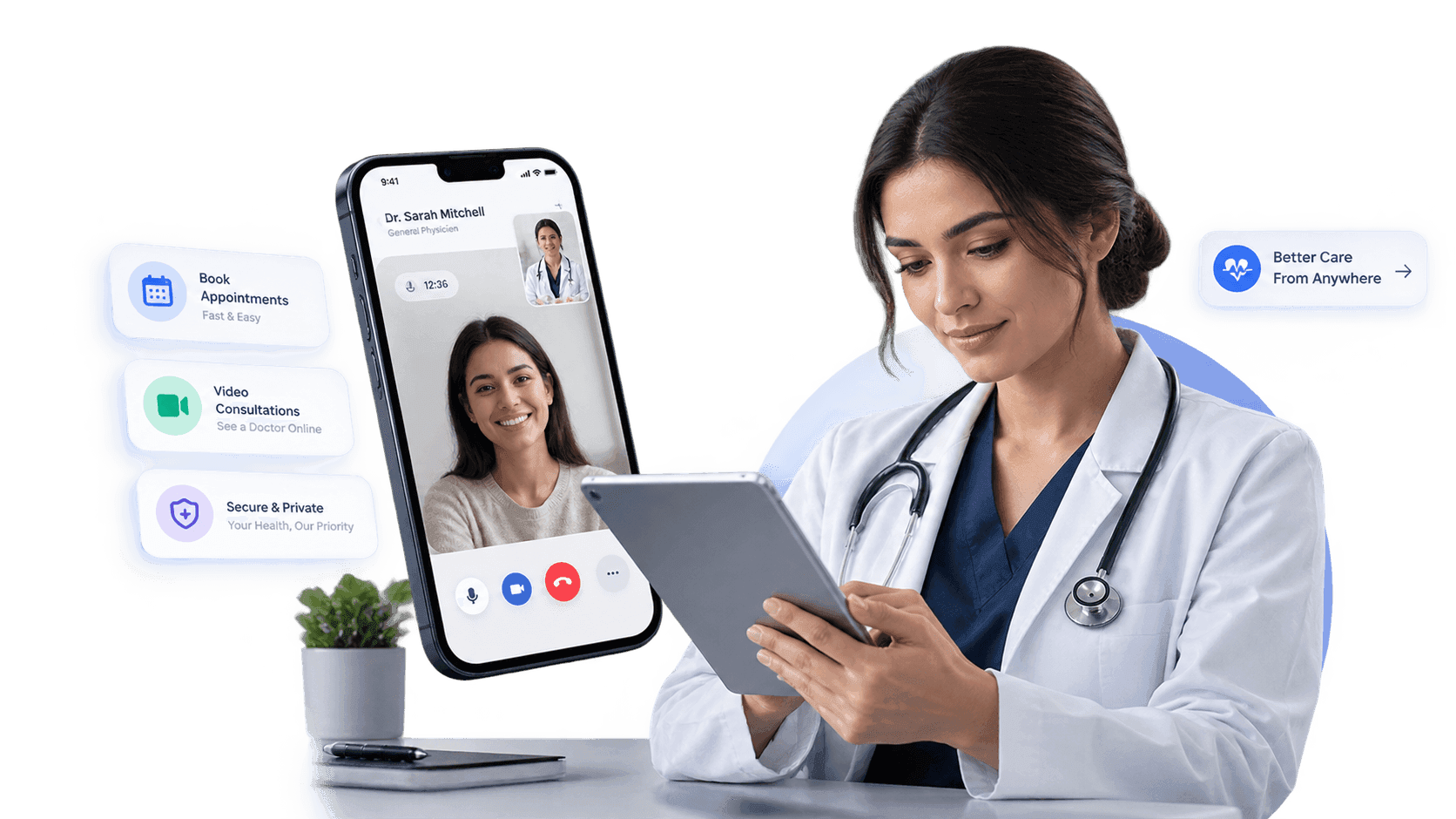
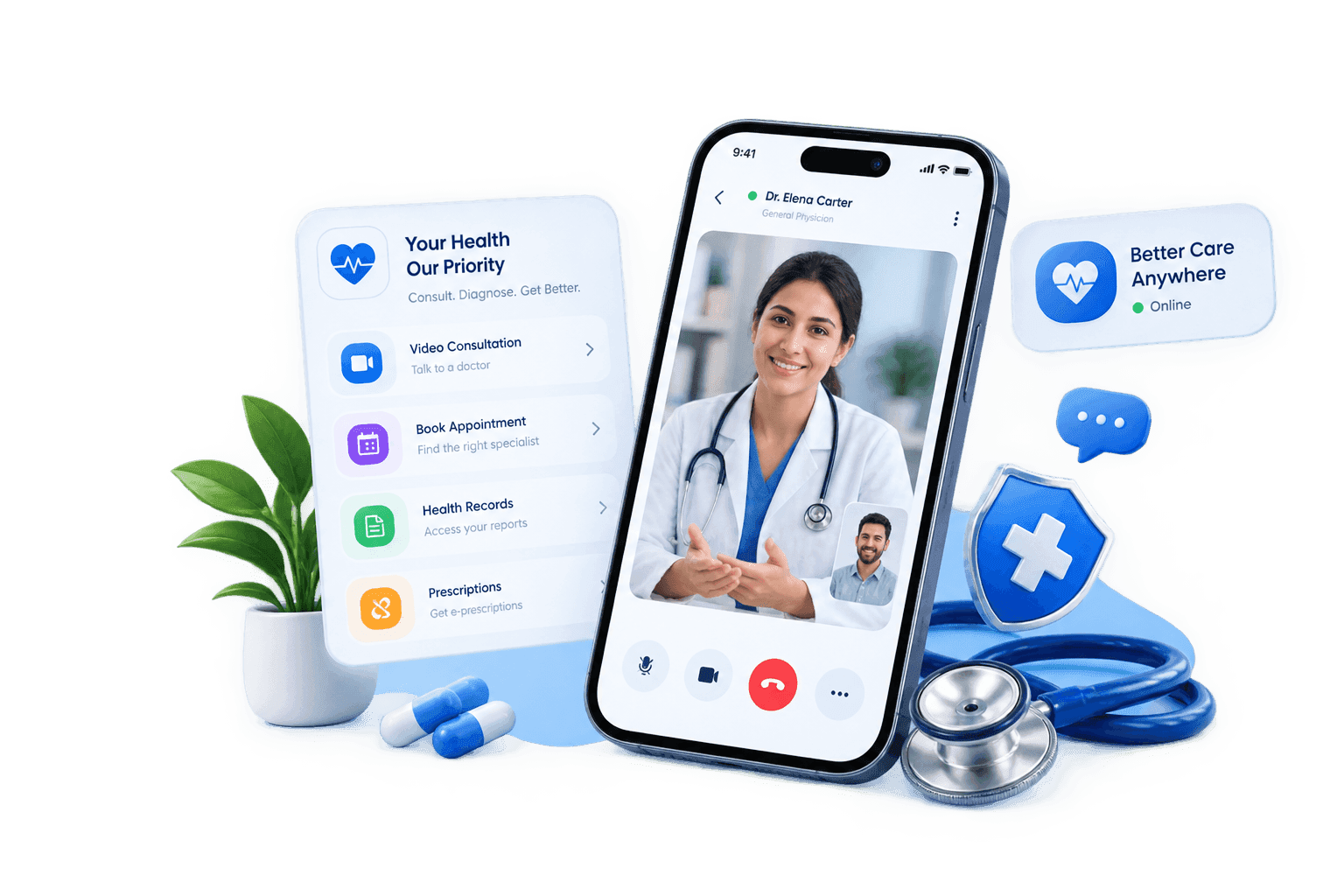
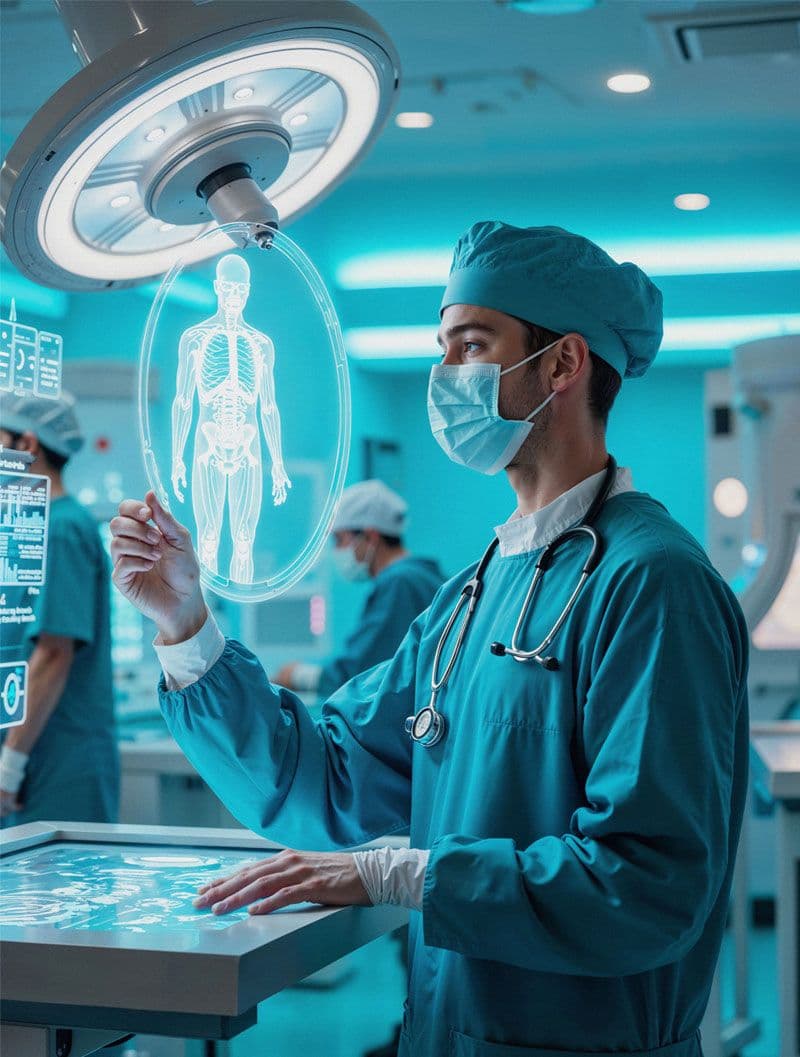
While telemedicine specifically facilitates direct remote clinical consultations, virtual diagnoses, and digital prescriptions between healthcare providers and patients, telehealth represents the broader digital health ecosystem. Telehealth encompasses clinical telemedicine alongside continuous Remote Patient Monitoring (RPM), medical IoT telemetry ingestion, digital health education, asynchronous remote diagnostics, multi-disciplinary care coordination, and decentralized hospital-at-home networks. At Junkies Coder, our healthtech engineers build scalable, enterprise-grade telehealth platforms that unify these interconnected care touchpoints. We combine low-latency WebRTC video streaming, bidirectional EHR interoperability via HL7 FHIR Release 4 and 5, automated EDI 837 insurance claims processing, and medical device data pipelines engineered to meet stringent HIPAA, GDPR, SOC 2, and DISHA regulatory standards.

Beyond Telemedicine: Full Care Continuum
RPM, IoMT & FHIR Interoperability
Empowering awards and recognition to Drive Innovation and Success with
our unparalleled expertise and commitment to excellence.
Years of experience
Countries Served
Average cost P/H
Positive Feedbacks
Projects delivered
Experts & Engineers
CORE FEATURES
From medical device integration and clinical workflow mapping to cloud scalability and FDA SaMD compliance, we build mission-critical telehealth solutions.
Clinical Workflow Mapping & HL7 FHIR Interoperability Scoping
Dual Patient-Physician Human-Centered UX Engineering
Medical IoT Device Ingestion & Bluetooth Telemetry Hub
Secure Multi-Channel Telehealth Communication Engine
Automated Revenue Cycle & EDI 837 Medical Claims Engine
Penetration Testing, Regulatory Audits & Global Store Rollout
A transparent 4 to 8 month engineering timeline designed to mitigate clinical risk and deliver a production-ready virtual care ecosystem.
Formulating clinical requirements, technical infrastructure, FHIR resource definitions, and regulatory compliance blueprints.
Developing WCAG-accessible patient portals and doctor charting interfaces validated through clinician user testing.
Building secure backend microservices, WebRTC media servers (mediasoup/Janus), and Bluetooth device data ingestion pipelines.
Connecting hospital EHR backends via HL7 FHIR APIs, Surescripts e-prescribing directories, and automated EDI medical billing.
Conducting end-to-end HIPAA penetration testing, medical device QA, Apple App Store and Google Play approvals, and 24/7 SLA monitoring.
Explore how Junkies Coder architects secure, interoperable telehealth systems that increase patient throughput and streamline clinical operations.

Industry
Maternity & Nursing Fashion
Platform
Website + Multi-Language Storefront
Location
Denmark
Outcomes
Unified Brand Experience Across Markets
Carriwell needed a website that matched the comfort and trust behind its products, and Junkies Coder delivered a seamless, user-friendly platform with multi-language storefronts and a brand experience built around expecting and nursing mothers.

Industry
Manufacturing
Platform
Corporate Website & E-Commerce
Location
Dammam, Saudi Arabia
Outcomes
Unified Digital Platform
Arnon Plastic Industries needed a modern digital presence to match its scale as a 25-year manufacturing leader, and Junkies Coder delivered a corporate website with an integrated product catalogue, dual service-line navigation, and a dedicated e-commerce store, giving Arnon a unified platform across its food packaging and building insulation divisions.

Industry
Retail & E-Commerce
Platform
Android (Native)
Location
Saudi Arabia
Outcomes
Live on Google Play
aDawliah Electronic Appliances is one of Saudi Arabia's largest specialty retailers, stocking over 6,000 products across musical instruments, professional audio, and consumer electronics. Despite strong brand recognition, the company had no dedicated mobile channel. Junkies Coder designed and engineered a full-featured Android app, bringing their entire catalog to the Saudi mobile-first consumer.

Industry
FashionTech & AI
Platform
Cross-Platform - iOS & Android
Location
Global
Outcomes
AI Virtual Try On
Doris is an intelligent fashion companion that eliminates wardrobe indecision. We engineered an AI powered platform that analyzes personal style, digitizes physical wardrobes, and provides high fidelity virtual try ons directly from any digital commerce website.
Whether you're looking to develop a digital solution from scratch, scale your current offerings, or fully modernize your system, we are here to help.
OUR EXPERTISE
We architect end-to-end virtual health ecosystems that connect medical IoT sensors, patient engagement portals, automated clinical decision engines, and enterprise hospital backbones.
Book a complimentary 30-minute telehealth architecture consultation with our senior digital health engineers to map your clinical workflows, FHIR integrations, and MVP delivery roadmap.

Supercharge your virtual care delivery platform with cutting-edge health informatics, predictive biometric analytics, and intelligent care automation.
01
High-accuracy clinical natural language processing converts multi-speaker doctor-patient audio into structured FHIR-ready SOAP documentation in real time.
02
Instant clearinghouse connectivity checks co-pays, deductibles, and active policy coverage prior to appointment confirmation.
03
Low-latency video architecture supporting concurrent specialist consults, certified medical translators, and family caregiver participation.
04
Machine learning models analyze continuous physiological telemetry streams from IoT wearables to detect early signs of clinical decline.
05
Cryptographic audit trails track every patient health record interaction while automating state medical board license verifications.
06
Secure multi-tenant infrastructure supporting multi-location hospital networks, localized branding, and departmental routing rules.
07
On-device neural networks calculate joint angles and movement accuracy during virtual physical rehabilitation and orthopedic exams.
08
High-performance browser-based radiological image viewer enabling radiologists to inspect, zoom, and annotate CT, MRI, and X-ray scans.
09
Adaptive bitrate streaming down to 64 kbps coupled with encrypted local storage to ensure uninterrupted clinical delivery in rural environments.
Our flexible telehealth architecture adapts to the diagnostic demands of primary care, tele-psychiatry, dermatology, cardiology, endocrinology, and tele-rehabilitation.
From regulatory scoping and FHIR data modeling to device integration and cloud launch, we adhere to a security-first engineering methodology.
We define clinical workflows, patient journeys, device connectivity protocols, and regulatory compliance frameworks (HIPAA, GDPR, DISHA, SaMD).
We design intuitive patient apps (WCAG 2.1 AA compliant) and optimized clinician workstations that minimize electronic documentation friction.
We construct the core telehealth platform in 3 to 4 months ($30,000 to $80,000), implementing WebRTC video streaming, scheduling, and device telemetry.
We scale the system to enterprise scale ($150,000 to $400,000+), enabling bidirectional EHR sync, automated EDI 837 billing, and multi-hospital rollouts.
Shalehin Modasia
Marketing DirectorENGAGEMENT MODELS
Whether launching an agile digital clinic MVP or engineering an enterprise hospital-at-home network, select an engagement model structured around your clinical milestones.
A focused 3 to 4 month build ($30,000 to $80,000) delivering core WebRTC video visits, patient booking, eRx, and essential EHR sync to validate your market.
Scope Your Telehealth MVPA dedicated pod of senior digital health engineers (frontend, mobile, backend, FHIR integrators, medical QA) for continuous roadmap delivery starting from $25/hr.
Hire Telehealth EngineersComprehensive digital health engineering ($150,000 to $400,000+) covering multi-hospital FHIR EHR interoperability, continuous RPM ingestion, and automated claims.
Discuss Enterprise RoadmapReal stories from real partners who experienced clarity, accountability, and measurable business growth.
We engineer robust digital care ecosystems leveraging WebRTC, mediasoup, HL7 FHIR Release 4 and 5, Swift, Kotlin, Flutter, AWS HealthLake, and Azure Health Data Services.
Featured Technologies
OpenAi
Claude
Falcon
Gemini
Mistral
Grok
Meta
Our telehealth software enforces defense-in-depth security, automated Business Associate Agreements (BAAs), and end-to-end encryption across all patient touchpoints.
Building a resilient telehealth ecosystem requires deep architectural experience spanning medical telemetry ingestion, healthcare interoperability, and airtight regulatory security.
We validate digital health concepts rapidly ($30,000 to $80,000) by delivering production-ready video consultations, patient scheduling, and initial EHR bridging in 3 to 4 months.
Engineered RESTful connectors ensuring seamless bidirectional data exchange with Epic Systems, Cerner / Oracle Health, athenahealth, and NextGen Healthcare.
Reliable background data streaming from FDA-cleared biometric sensors, continuous glucose monitors, and wearable health patches.
Pre-integrated with Surescripts network protocols, providing automated drug interaction checks and certified dual-factor physician signature authorization.
Automated real-time insurance verification and instant CPT/ICD-10 clinical coding validation to accelerate reimbursement cycles and reduce claim rejections.
Hierarchical database architecture that partitions patient data across independent health clinics, regional medical centers, and distinct clinical departments.
Encrypted on-device SQLite database that allows doctors to conduct exams without internet, syncing securely with hospital EHRs upon reconnection.
End-to-end cryptographic protection featuring TLS 1.3 in transit, AES-256 at rest, granular role-based access controls, and automated Business Associate Agreements.
Natural language processing models that transcribe patient-doctor dialogue in real time and generate structured clinical summaries for rapid physician sign-off.
On-device kinematic pose estimation algorithms that calculate musculoskeletal joint angles and deliver real-time exercise feedback during virtual physical therapy.

Developing a custom telehealth platform typically ranges from $30,000 to $80,000 for a foundational Minimum Viable Product (MVP) delivering secure virtual visits, patient portals, and initial Bluetooth medical device streaming. Comprehensive enterprise telehealth ecosystems covering continuous Remote Patient Monitoring (RPM) data pipelines, multi-facility HL7 FHIR EHR bridges (Epic, Cerner), automated EDI 837 claims engines, and decentralized virtual ward infrastructure range from $150,000 to $400,000 or more depending on architectural scope and medical device integrations.
Telemedicine refers specifically to direct clinical care delivered remotely between a medical provider and a patient, encompassing real-time video consultations, remote clinical diagnosis, electronic prescriptions, and encounter charting. Telehealth is a broader, overarching digital health continuum that includes clinical telemedicine alongside continuous Remote Patient Monitoring (RPM), medical IoT wearable telemetry ingestion, asynchronous diagnostic imaging, patient health education, multi-disciplinary care team coordination, and decentralized hospital-at-home networks.
Our telehealth architecture connects with FDA-cleared biometric sensors, continuous glucose monitors (CGM), pulse oximeters, smart scales, and ECG patches via Bluetooth Low Energy (BLE), cellular IoT hubs, Apple HealthKit, and Google Health Connect. Ingested time-series data streams into encrypted event pipelines (Kafka/RabbitMQ) and time-series databases. Automated clinical rule engines continuously evaluate biometric streams against individualized patient thresholds, generating instant clinical escalation alerts when anomalies occur.
Virtual wards combine continuous biometric sensor monitoring in residential environments with centralized clinical command centers. Attending medical teams monitor live multi-patient telemetry dashboards, manage virtual nurse rounding schedules, dispatch mobile phlebotomy or home health visits, and execute automated clinical escalation pathways if biometric parameters deteriorate, safely reducing hospital bed occupancy and 30-day readmission rates.
The platform standardizes care delivery across multi-disciplinary teams using FHIR CarePlan and CareTeam data models. Primary care physicians, visiting nurses, physical therapists, and case managers collaborate through unified longitudinal patient timelines, shared clinical task delegation boards, inter-provider case messaging, and synchronized EHR chart updates, ensuring seamless continuum-of-care handoffs across inpatient and outpatient settings.
We engineer interactive patient education portals and evidence-based digital therapeutics (DTx) adhering to FDA Software as a Medical Device (SaMD) regulatory standards. The system delivers condition-specific educational modules (for diabetes, hypertension, and oncology recovery), personalized dietary and lifestyle tracking, medication adherence gamification, and validated patient survey feedback loops that empower patients to manage chronic conditions proactively.
Asynchronous workflows allow patients and local clinics to transmit diagnostic imaging, dermoscopy photos, and structured clinical questionnaires securely to remote specialists. Our platform integrates zero-footprint web DICOM viewers and Picture Archiving and Communication System (PACS) connectors (such as DCM4CHEE and Orthanc), enabling radiologists, dermatologists, and ophthalmologists to render, zoom, calibrate, and report on medical studies with guaranteed turnaround SLAs.
We build bidirectional healthcare integrations leveraging RESTful HL7 FHIR Release 4 and 5 APIs, HL7 v2 messaging, and SMART on FHIR authorization protocols. Our data bridges connect with major hospital backends including Epic Systems, Cerner / Oracle Health, Allscripts, and athenahealth, synchronizing patient demographics, continuous vitals observations, diagnostic lab orders, appointment schedules, and clinical summaries in real time without manual re-entry.
Our revenue cycle automation engine performs real-time EDI 270/271 insurance eligibility checks prior to care delivery, logs clinical encounter durations, and tracks continuous RPM device transmission days. The system automatically populates required CPT and HCPCS codes (such as CPT 99453, 99454, 99457, and 99458 for RPM) alongside ICD-10 diagnostic codes to compile clean EDI 837 professional claims for automated submission to clearinghouses.
Our population health intelligence layer analyzes aggregated longitudinal biometric streams, social determinants of health (SDOH), and clinical encounter histories. Machine learning models generate predictive acuity risk scores that identify rising-risk patient cohorts before acute hospitalization is required, allowing healthcare networks to automate preventive interventions and optimize performance under value-based care contracts.
Yes. Our telehealth architecture supports Decentralized Clinical Trials (DCT) by providing 21 CFR Part 11 compliant Electronic Informed Consent (eConsent), structured Electronic Patient-Reported Outcomes (ePRO) intake schedules, automated biometric marker capture from connected research devices, and immutable audit trails configured for FDA and global clinical trial regulatory submissions.