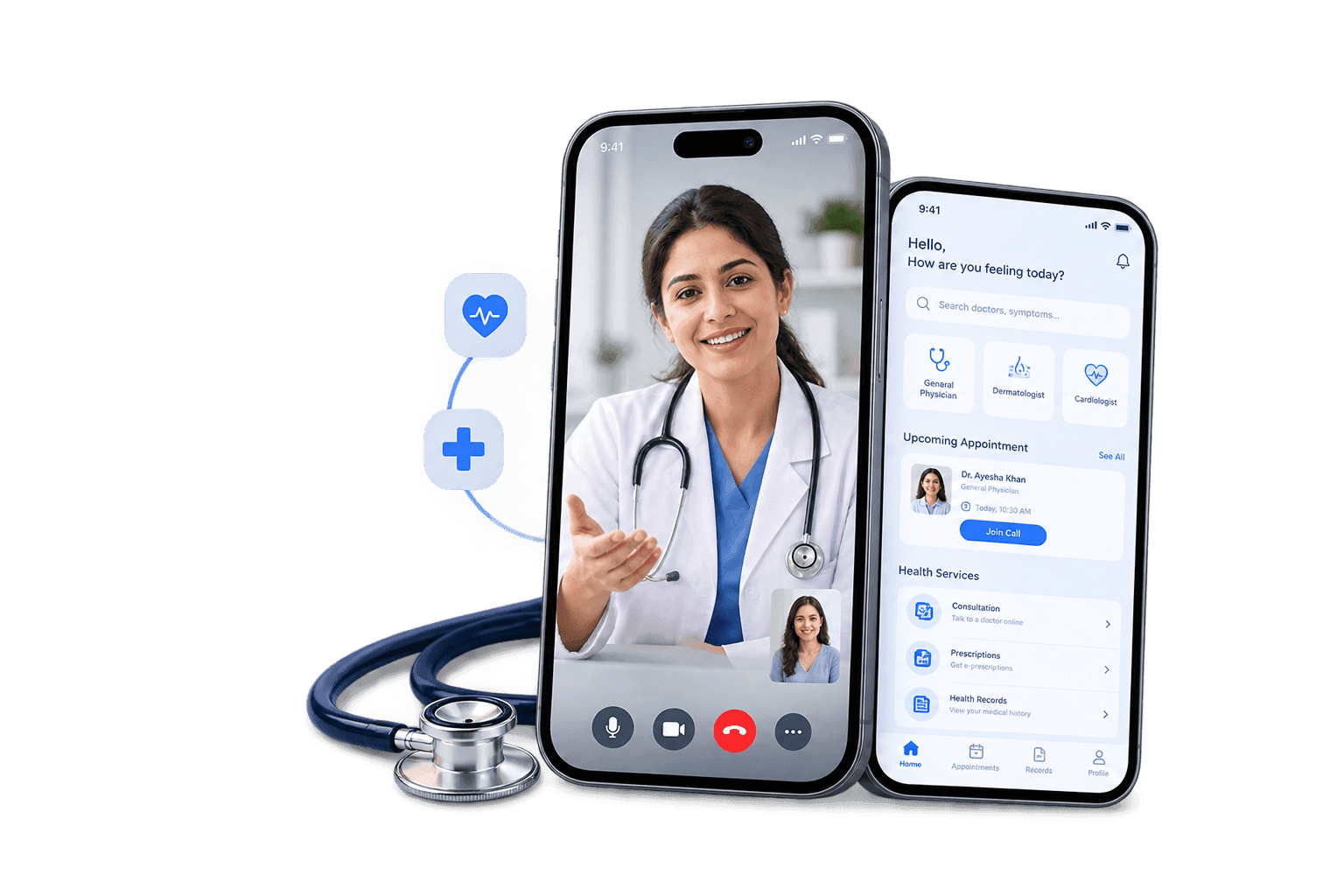
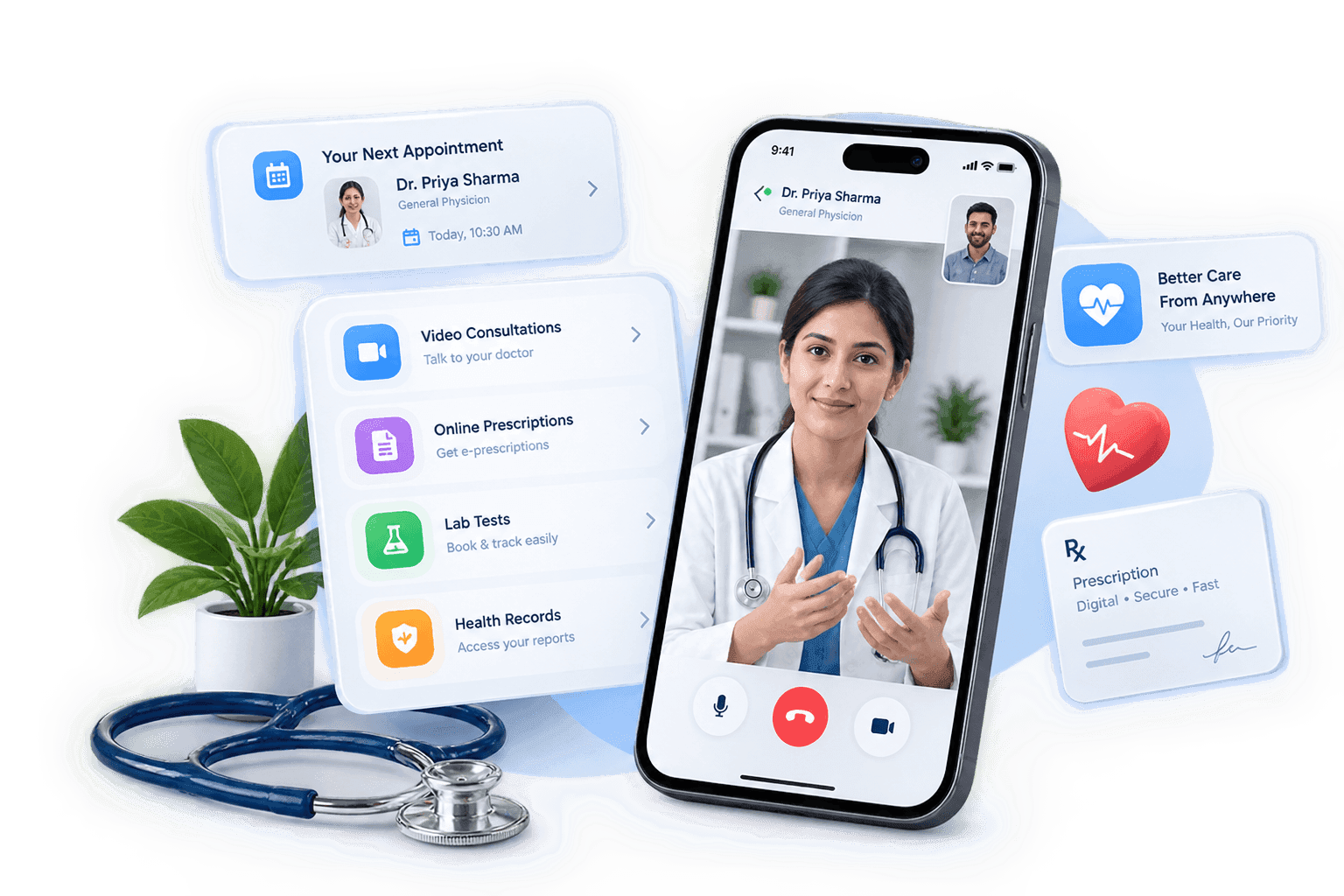
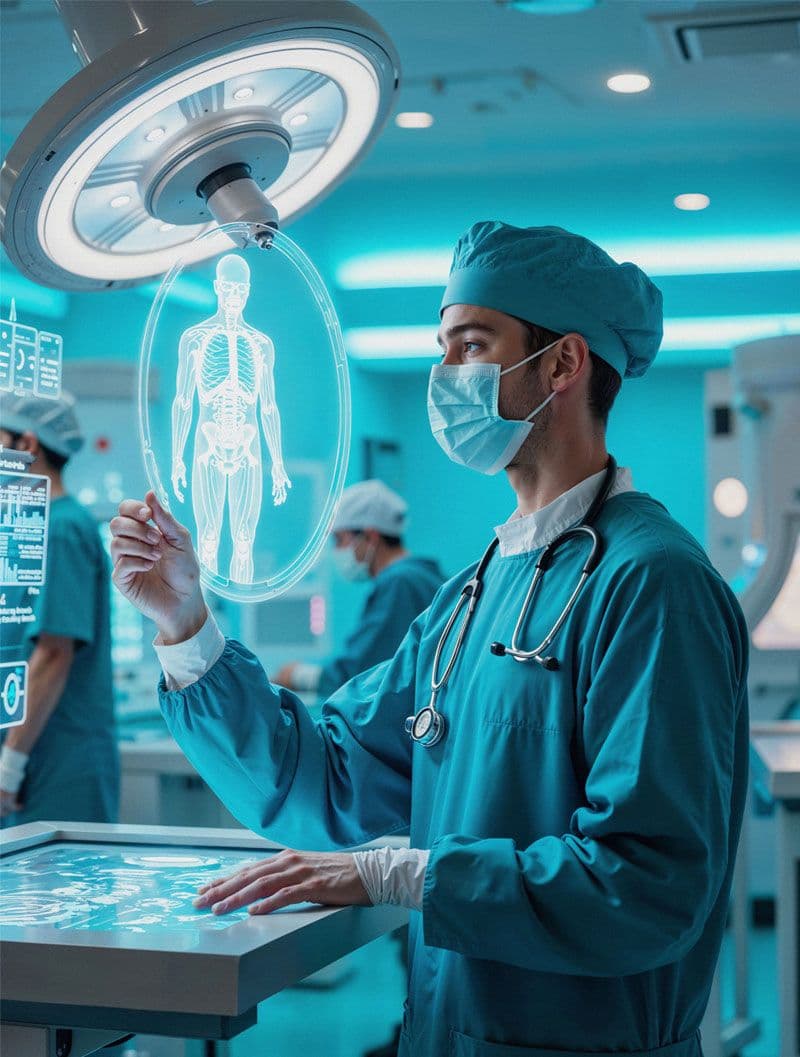
Telemedicine refers specifically to providing clinical medical care remotely between a healthcare provider and a patient. This encompasses synchronous encrypted video consultations, remote clinical diagnosis, certified electronic prescriptions (eRx and EPCS), and structured follow-up consultations. At Junkies Coder, we engineer enterprise-grade telemedicine applications that connect patients, physicians, and healthcare networks seamlessly. Our architectures combine ultra-low latency WebRTC encrypted video streaming, bidirectional EHR and EMR interoperability via HL7 FHIR APIs, automated clinical documentation, and digital medical billing engines. Whether building a rapid market-entry MVP or modernizing clinical workflows for a multi-facility healthcare system, our digital health engineering teams ensure airtight HIPAA, GDPR, and DISHA compliance from day one.

Provider-to-Patient Remote Care
Video, eRx & Clinical Diagnosis
Empowering awards and recognition to Drive Innovation and Success with
our unparalleled expertise and commitment to excellence.
Years of experience
Countries Served
Average cost P/H
Positive Feedbacks
Projects delivered
Experts & Engineers
CORE FEATURES
We deliver comprehensive telehealth engineering across the entire product lifecycle, ensuring clinical usability, high-concurrency video reliability, and strict sovereign regulatory compliance.
Clinical Discovery & Healthcare Regulatory Scoping
Dual-Persona UI/UX Design for Patients & Clinicians
High-Concurrency WebRTC Encrypted Video Engine
Bidirectional EHR & EMR Integration via HL7 FHIR
Automated Insurance Verification & EDI 837 Claims
HIPAA Penetration Testing & App Store Deployment
Telemedicine applications require rigorous clinical scoping, compliance validation, staged load testing, and app store clearance.
Mapping clinical workflows, patient journeys, EHR integration points, and regulatory compliance standards (HIPAA, GDPR, DISHA).
Designing patient-friendly portals and doctor workstations with interactive clickable prototypes and accessibility reviews.
Building scalable backend microservices, WebRTC media servers (mediasoup/Janus), and secure patient-doctor communication channels.
Connecting hospital EHR systems via HL7 FHIR, Surescripts e-prescribing networks, and PCI-DSS compliant billing gateways.
Executing automated vulnerability scans, third-party HIPAA audits, Apple App Store / Google Play Store approvals, and 24/7 SLA monitoring.
Explore how Junkies Coder architects mission-critical healthcare software that connects patients and doctors while optimizing practice revenue.

Industry
Agro Logistics
Technology
Web / IoT / ERP
Location
India
Outcomes
50% Reduction
Vaishnodevi Agro Resources Pvt. Ltd needed a digital tracking system to replace manual agro-logistics processes in Radhanpur, India, covering truck entries, weighbridge, seed processing, lab reporting and dispatch management.
Whether you're looking to develop a digital solution from scratch, scale your current offerings, or fully modernize your system, we are here to help.
OUR EXPERTISE
Custom telemedicine software eliminates geographic care boundaries, reduces clinic no-show rates by up to 60%, automates clinical charting, and safeguards Protected Health Information (PHI).
Book a complimentary 30-minute architecture session with our senior digital health engineers to map your clinical workflows, FHIR integrations, and MVP delivery roadmap.

Enterprise digital health ecosystems require advanced interoperability, automated AI triage, continuous IoT telemetry, and automated medical billing engines.
01
Ambient clinical voice transcription and NLP symptom assessment that draft structured SOAP notes for attending physicians, saving up to 2 hours of charting daily.
02
Real-time EDI 270/271 patient eligibility checks, automated CPT and ICD-10 coding validation, and clean EDI 837 claim submission for rapid insurance reimbursement.
03
Selective Forwarding Unit (SFU) video routing enabling multi-specialist consultations, medical interpreter additions, and family caregiver participation in virtual visits.
04
Standardized clinical triage algorithms that automatically assess patient acuity scores and route urgent cases to on-call emergency clinicians immediately.
05
Cryptographic logging of all PHI access events and automated verification of medical licenses across multiple state and regional healthcare jurisdictions.
06
Centralized practice management infrastructure supporting multi-location hospital systems, distinct departmental routing, and multi-timezone scheduling.
07
Real-time on-device computer vision algorithms that track joint angles and range of motion during virtual physical therapy sessions, providing instant biomechanical feedback.
08
Machine learning models analyzing continuous physiological data streams from IoT wearables to detect early indicators of clinical decline and alert rapid response teams.
09
Resilient encrypted local storage architecture allowing clinicians to document visits in low connectivity rural settings, synchronizing securely with hospital EHRs upon reconnection.
From primary care and urgent tele-triage to mental health, dermatology, and cardiology, our telemedicine software adapts to specialized clinical demands.
Progressing your telemedicine software from initial clinical architecture to verified, compliant deployment across web, iOS, Android, and hospital networks.
We define clinical user journeys, data touchpoints, system integration matrices, and mandatory regulatory compliance protocols (HIPAA, GDPR, DISHA, FDA SaMD).
We craft accessible, user-friendly layouts tailored separately for patients (WCAG 2.1 AA accessible) and doctors (streamlined EHR charting and diagnostic tools).
We build the core Minimum Viable Product in 3 to 4 months ($25,000 to $80,000), establishing encrypted WebRTC video streaming, scheduling, and digital prescriptions.
We expand the platform into a comprehensive health ecosystem ($150,000 to $250,000+), connecting hospital EHRs via HL7 FHIR, RPM IoT sensors, and EDI 837 billing.
Shalehin Modasia
Marketing DirectorENGAGEMENT MODELS
From a rapid MVP to full-scale enterprise hospital integration, we offer transparent engagement models tailored to your clinical roadmap.
A fast-track 3 to 4 month build ($25,000 to $80,000) delivering core WebRTC video consultations, patient booking, and digital prescriptions to validate your market.
Schedule an MVP ConsultationA dedicated senior engineering team (frontend, mobile, backend, healthcare QA, DevOps) providing continuous feature expansion starting from $25/hr.
Hire Telehealth DevelopersCustom enterprise telehealth engineering ($150,000 to $250,000+) covering multi-facility EHR sync via FHIR, RPM device telemetry, and automated EDI 837 billing.
Discuss Enterprise ArchitectureReal stories from real partners who experienced clarity, accountability, and measurable business growth.
We engineer telemedicine applications using WebRTC, HL7 FHIR, Swift, Kotlin, Flutter, AWS HealthLake, and Azure Health Data Services.
Featured Technologies
OpenAi
Claude
Falcon
Gemini
Mistral
Grok
Meta
Healthcare organizations require impenetrable data protection, continuous encryption, automated BAAs, and comprehensive audit logs.
Generic software development shops lack clinical workflow depth and healthcare compliance rigor. Organizations looking for sovereign data protection, seamless EHR interoperability, and high-performance video streaming partner with Junkies Coder.
We build and launch your core telemedicine MVP ($25,000 to $80,000) rapidly, establishing encrypted video streaming, patient scheduling, and digital prescription workflows.
Direct interoperability with Epic Systems, Cerner / Oracle Health, Allscripts, and athenahealth ensures zero manual data entry and synchronized clinical records.
Your telehealth product is engineered by senior developers experienced in HIPAA Security Rules, WebRTC signaling, and medical-grade IoT device integration.
You own 100% of your source code, IP, and patient data infrastructure, avoiding recurring per-provider platform licensing fees.
End-to-end encryption (TLS 1.3, AES-256), multi-factor authentication, granular RBAC, and immutable PHI audit logging are engineered from day one.
We connect BLE and cellular blood glucose meters, pulse oximeters, blood pressure cuffs, and ECG monitors directly to live clinician workstations.
Direct digital connectivity with Surescripts and regional pharmacy management systems for instant prescription routing, dosage conflict checking, and automated refills.
Encrypted audio and video streaming that dynamically adjusts bitrate to maintain clear, stutter-free consultations across unstable 4G, 5G, and rural broadband networks.
Real-time EDI 270/271 patient insurance verification and automated CPT and ICD-10 coding validation to accelerate claim submission and maximize practice collections.
Sub-second streaming and interactive annotation for CT, MRI, and X-ray studies directly inside web and mobile browsers without heavy client software downloads.

Developing a custom clinical telemedicine app typically ranges from $25,000 to $80,000 for a foundational Minimum Viable Product (MVP) engineered with encrypted WebRTC video streaming, patient and physician onboarding, calendar scheduling, digital clinical intake, and basic electronic prescribing. Enterprise-grade clinical platforms requiring multi-specialty virtual clinic routing, ambient AI SOAP charting, EPCS-certified prescribing networks, and bidirectional hospital EHR synchronization range from $120,000 to $250,000 depending on custom integration scope and security certifications.
We engineer low-latency real-time video architectures utilizing WebRTC protocols routed through custom Selective Forwarding Units (SFUs) powered by mediasoup or Janus. Video and audio streams are protected using Datagram Transport Layer Security (DTLS) and Secure Real-time Transport Protocol (SRTP) with AES-128 or AES-256 encryption. Our media server pipeline incorporates dynamic adaptive bitrate streaming down to 64 kbps, ensuring smooth and stutter-free clinical video visits even over congested 4G, 5G, or rural broadband networks.
Our e-prescribing modules are architected to satisfy Electronic Prescriptions for Controlled Substances (EPCS) mandates established by the DEA and national pharmacy networks. We integrate with Surescripts utilizing National Council for Prescription Drug Programs (NCPDP) SCRIPT standard messaging. The workflow enforces dual-factor authentication for physician signature authorization, automated National Drug Code (NDC) lookups, real-time drug-allergy and drug-drug interaction alerts, and patient insurance formulary co-pay checks.
Yes. We integrate ambient AI clinical transcription models that listen to doctor-patient dialogue during virtual visits, filter ambient noise, and transcribe clinical speech into structured Subjective, Objective, Assessment, and Plan (SOAP) notes in real time. Attending doctors can review, edit, and digitally sign the structured documentation directly inside their workstation, which then synchronizes automatically with hospital EHRs via HL7 FHIR APIs to eliminate manual documentation overhead.
Our SFU-based video engine supports concurrent multi-party clinical conferencing with granular permission controls. Attending clinicians can dynamically invite certified medical translators through integrated language services (such as LanguageLine Solutions), admit secondary clinical specialists for real-time peer consultations, or allow authorized family caregivers into the virtual consultation room with physician-managed microphone and video privileges.
Virtual waiting rooms incorporate automated patient arrival check-ins, pre-consultation medical questionnaire completion, and real-time wait-time estimations. Integrated Emergency Severity Index (ESI) triage algorithms evaluate patient-submitted symptoms before the call begins. If acute emergency flags are identified, the system immediately alerts on-call clinical triage teams and displays direct local emergency contact routing to ensure patient safety.
Clinicians have access to in-consultation diagnostic utilities including high-resolution video freeze-frame capture, multi-layer screen annotation whiteboards, side-by-side diagnostic lab review windows, and sub-second radiological image viewing. Patients can also upload high-clarity clinical photographs directly into the active session chat for immediate dermatological or wound evaluation without disrupting the video feed.
We build automated provider credentialing workflows that query National Provider Identifier (NPI) registry databases and state medical licensing boards via secure verification APIs. The platform enforces automated geo-fencing rules during appointment scheduling to ensure attending physicians only accept patient appointments from jurisdictions where their medical practice licenses and DEA certifications are active and verified.
Following consultation completion, the application automatically delivers structured post-care instructions, digital pharmacy pick-up notifications, and scheduled follow-up consultation reminders. Patients and providers can communicate through encrypted asynchronous messaging channels linked directly to specific encounter records, allowing patients to ask clarifying questions within a defined post-consultation timeframe.
Under the official Telemedicine Practice Guidelines issued on March 25, 2020, by MoHFW and the National Medical Commission (NMC), Registered Medical Practitioners (RMPs) can prescribe medications across specific lists: List O encompasses over-the-counter medications, List A covers first-consultation prescription drugs such as anti-hypertensives and anti-histamines, and List B covers follow-up maintenance medications for chronic conditions. Prescribing Schedule X drugs and narcotics via telemedicine is strictly prohibited under Indian law.